


🍳 In This Article
- The Rich History and Cultural Roots of This Dish
- Why This Recipe Works: The Food Science Behind It
- Complete Ingredient Breakdown
- Step-by-Step Instructions
- Expert Tips from Years of Kitchen Experience
- Nutritional Benefits and Health Insights
- Creative Variations and Dietary Adaptations
- Frequently Asked Questions
- Final Thoughts
There is a specific kind of magic that happens in the early morning light of a Tokyo cafe, where the air is thick with the scent of toasted flour and the rhythmic “clink-clink” of whisks hitting stainless steel. Before you even see them, you hear the excitement of the patrons. Then, the plate arrives: two or three towering, impossibly tall golden discs that quiver with every movement of the server. These are not your standard buttermilk flapjacks; these are Japanese souffle pancakes. They represent a pinnacle of breakfast engineering—a dish that defies gravity and challenges our understanding of what a batter can achieve. As a culinary journalist, I have spent years deconstructing the “why” behind the “wow,” and these pancakes are perhaps the most rewarding puzzle I’ve ever solved. They require a blend of artistic finesse and scientific precision, transforming humble eggs and flour into an ethereal, cloud-like experience that melts the moment it touches your tongue.
The Rich History and Cultural Roots of This Dish
The story of the Japanese souffle pancake is a fascinating study of cultural synthesis. While pancakes have existed in various forms in Japan since the Edo period—originally as a thin, crepe-like sweet called funo-yaki—the modern souffle iteration is a relatively recent phenomenon. It emerged from the “Fuwafuwa” (fluffy) food trend that swept through Osaka and Tokyo in the mid-2010s. This movement celebrated textures that were airy, soft, and light, reflecting a broader Japanese aesthetic preference for delicacy and refinement. Specialty cafes began competing to see who could produce the tallest, most “jiggly” pancake, turning a simple breakfast staple into a viral sensation that drew lines around city blocks.
At its heart, the souffle pancake is a marriage of Western pastry techniques and Japanese culinary philosophy. The “souffle” element is borrowed directly from French haute cuisine, utilizing the power of whipped egg whites to provide structure and lift. However, the Japanese adaptation moved the process from the oven to the griddle. This shift required a fundamental reimagining of heat application. In Japan, the dish is often associated with “shiawase” (happiness), with many of the most famous purveyors including the word in their names. It is viewed not just as a meal, but as a celebratory treat—a moment of indulgence that rewards patience and attention to detail.
The evolution of this dish also mirrors Japan’s post-war embrace of wheat-based products. As flour became more accessible, Western-style “hotcakes” became a household favorite. But the Japanese palate, which often prizes the subtle sweetness and unique mouthfeel of sponge cakes and mochi, eventually pushed the humble hotcake toward this more sophisticated, airy form. Today, these pancakes are a global ambassador for Japanese cafe culture, found in major cities from New York to London, yet the most authentic versions still rely on the meticulous standards of temperature and timing perfected in the small kitchens of Harajuku and Ginza.
I remember the first time I attempted these in my own kitchen. I expected a disaster—deflated puddles of sweet egg. But understanding the cultural weight of the dish helped me realize that this isn’t “fast food.” It is slow food disguised as breakfast. In Japan, it is common to wait 20 to 30 minutes for your order because each batch is made from scratch, whipped to order. Embracing this pace is the first step toward mastery. When you approach the griddle, you aren’t just making breakfast; you are participating in a modern culinary tradition that values the ephemeral beauty of a perfect, wobbly rise.

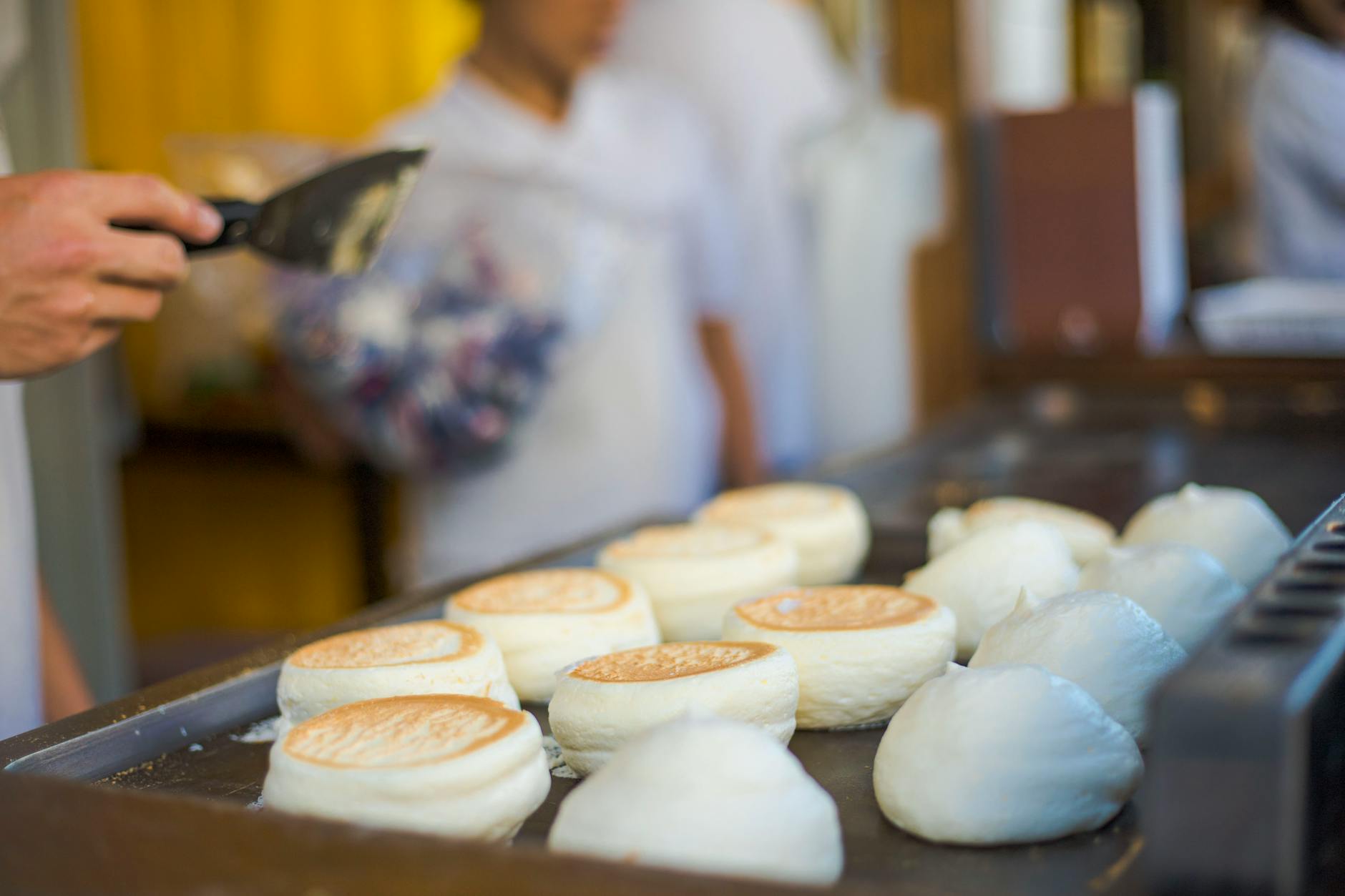
📷 Photo by Polina Tankilevitch on Pexels — Free to use under the Pexels License
Why This Recipe Works: The Food Science Behind It
The structural integrity of a souffle pancake relies almost entirely on the physics of air bubbles and the chemistry of protein denaturation. Unlike a traditional pancake, which uses chemical leaveners like baking powder to create small carbon dioxide bubbles, the souffle pancake depends on a stable “meringue” base. When you whisk egg whites, you are physically unfolding the globule proteins (mainly ovalbumin). These unfolded proteins then realign to form a network that traps air. The addition of sugar is critical here; it dissolves into the water of the egg whites to create a viscous syrup that coats the air bubbles, preventing them from popping and helping the foam resist the heat of the pan.
According to Mayo Clinic, nutrition science and health plays an important role in understanding food preparation and nutrition.
The second pillar of this recipe is the Maillard reaction, occurring at the base of the pancake. Because we cook these at a very low temperature—typically around 300°F (150°C)—the browning process is slow and controlled. This creates a delicate, paper-thin “skin” on the bottom and top that acts as a container for the steam-filled interior. Speaking of steam, that is our secret weapon. By adding a few drops of water to the pan and covering it with a lid, we create a localized humid environment. This steam transfers heat more efficiently than dry air, allowing the center of the tall pancake to cook through and “set” its protein structure before the bottom burns.
Finally, we must consider gluten development. In a standard pancake, you want some gluten for a chewy bite. Here, gluten is the enemy of fluffiness. We use cake flour, which has a lower protein content (around 6-8%) compared to all-purpose flour (10-12%). By minimizing the mixing once the flour is added to the egg yolk base, we ensure that the final product remains tender. The goal is a delicate crumb that is just strong enough to hold the weight of the air, but weak enough to dissolve instantly on the palate. It is a high-wire act of culinary engineering where every gram of sugar and every degree of heat plays a vital role.
Complete Ingredient Breakdown
Success starts with the quality and temperature of your ingredients. Here is what you will need for a perfect batch of 3 to 4 large pancakes:
According to USDA FoodData Central, nutritional data and food composition plays an important role in understanding food preparation and nutrition.
- Large Eggs (2): The eggs must be separated carefully. I prefer using cold eggs for the whites because they form a more stable, albeit slower-growing, meringue. The yolks provide the fat and emulsification needed for the base.
- Cake Flour (30g / approx. 4 tablespoons): This is non-negotiable. The low protein content is what gives the pancake its “melt-in-your-mouth” texture. If you only have all-purpose flour, you can replace 1 teaspoon of it with cornstarch to mimic the effect.
- Whole Milk (20ml / approx. 1.5 tablespoons): This provides the liquid phase for the yolk base. The fats in whole milk contribute to a richer flavor profile.
- Granulated Sugar (25g / approx. 2 tablespoons): Beyond sweetness, sugar is a structural stabilizer for the meringue. It bonds with the water in the egg whites to prevent “weeping” or deflation.
- Baking Powder (1g / 1/4 teaspoon): While the meringue does the heavy lifting, a tiny amount of baking powder provides “insurance” lift during the initial contact with the heat.
- Vanilla Extract (1/2 teaspoon): This masks the “eggy” smell that can sometimes overwhelm souffle-based dishes.
- Cream of Tartar (a pinch): This acid lowers the pH of the egg whites, which helps the protein bonds become more flexible and less likely to break during the folding process.
- Fresh Berries and High-Quality Maple Syrup: For garnishing. The acidity of berries like raspberries or blueberries cuts through the richness of the egg-heavy batter.

📷 Photo by ANTONI SHKRABA production on Pexels — Free to use under the Pexels License
Step-by-Step Instructions
Before you begin, ensure your pan is non-stick and has a tight-fitting lid. This is a “mise en place” heavy recipe; once you start whipping, you cannot stop to look for a spatula. Take a deep breath, clear your counter, and prepare to work with a gentle touch. For more delicious ideas, explore our drinks and beverages collection.
- Step 1 — The Yolk Base Emulsification: In a medium bowl, whisk the 2 egg yolks with the milk and vanilla extract until pale and slightly frothy. Sift the cake flour and baking powder directly into the bowl. Whisk gently until just combined. Do not overwork the batter here; you want to avoid developing gluten. The consistency should be like a thick, smooth paste.
- Step 2 — Creating the Stable Meringue: In a separate, spotlessly clean glass or metal bowl, begin whisking the egg whites with the cream of tartar on low speed. Once bubbles start to form, gradually add the sugar in three stages. Increase the speed to medium-high. You are looking for “stiff peaks”—when you lift the whisk, the peak should stand straight up without drooping. This usually takes 3-5 minutes. The meringue should look glossy, like shaving cream.
- Step 3 — The Delicate Fold: This is the most critical stage. Take one-third of the meringue and whisk it vigorously into the yolk base. This “lightens” the base so the rest of the meringue doesn’t collapse. Now, switch to a silicone spatula. Add the remaining meringue and fold it in using a “J-motion”: cut through the center, scrape the bottom, and lift over. Stop the moment no white streaks remain. Every fold loses air, so be efficient.
- Step 4 — The First Scoop and Steam: Preheat your non-stick pan on the lowest possible setting. Lightly grease with a paper towel dipped in oil. Use an ice cream scoop to place three tall mounds of batter onto the pan. Add 1 teaspoon of water to the empty spaces in the pan (not on the pancakes!) and cover immediately with the lid. Let them steam for 2-3 minutes.
- Step 5 — The Second Scoop (The Height Secret): Remove the lid. Add another scoop of batter directly on top of the existing mounds. This double-layering technique is how you get that incredible height. Add another teaspoon of water if the first has evaporated, cover again, and cook for another 4-5 minutes. The surface should look matte and feel slightly tacky but not wet.
- Step 6 — The Flip and Final Set: Very gently, slide a thin spatula under a pancake and flip it over. It should feel like a balloon. Add one last teaspoon of water, cover, and cook for 5-6 minutes more. Use a digital thermometer if you’re unsure; the internal temperature should reach 175°F (80°C) to ensure the proteins have set. Serve immediately on a warmed plate.
Expert Tips from Years of Kitchen Experience
Mastering this dish is about understanding the nuances that aren’t usually written in a standard recipe. After dozens of batches, I’ve learned that the environment of your kitchen actually matters. On a very humid day, your meringue might struggle to hold its shape, requiring an extra minute of whipping. It’s also vital to use a pan with a heavy bottom; thin pans have hot spots that will burn the bottom of your pancake before the middle has had a chance to rise.
- Temperature Control: If your stove’s “low” is still too hot, use a heat diffuser. The pancakes need a steady, gentle heat to allow the air inside to expand slowly. If they rise too fast, they will collapse just as quickly when they hit the cold air of the kitchen.
- Ingredient Quality: Use the freshest eggs possible. Older eggs have thinner whites with weaker protein structures that don’t hold air as well. Also, ensure your bowl is completely free of fat or grease; even a microscopic drop of yolk in the whites will prevent them from reaching stiff peaks.
- Timing and Patience: One trick I discovered is to chill your mixing bowl in the freezer for 10 minutes before whipping the whites. This helps create a finer, more stable bubble structure. Never rush the flip; if the pancake feels too soft to move, give it another minute of steaming.
- Seasoning Balance: While the batter is sweet, a tiny pinch of sea salt in the yolk base can transform the flavor profile, making the vanilla and maple notes pop. Don’t skip it!
Nutritional Benefits and Health Insights
While Japanese souffle pancakes are undoubtedly a treat, they offer a different nutritional profile than traditional heavy, flour-laden pancakes. Because the volume is mostly air, a serving of two pancakes typically contains only about 250 to 300 calories. They are significantly higher in protein relative to their size, thanks to the high egg-to-flour ratio. A single serving provides approximately 10-12 grams of high-quality protein, which includes all essential amino acids necessary for muscle repair and metabolic function.
Eggs are also a powerhouse of micronutrients. They are one of the best dietary sources of choline, which is essential for brain health and cellular integrity. You’re also getting a healthy dose of Vitamin B12 and riboflavin (B2). When paired with fresh berries, you add a punch of antioxidants like anthocyanins and Vitamin C, which help combat oxidative stress. To make this a more balanced meal, I often serve mine with a side of Greek yogurt for added probiotics or use a monk fruit sweetener in the meringue to reduce the glycemic load for those watching their blood sugar levels. For more delicious ideas, explore our quick and easy recipes collection.
Creative Variations and Dietary Adaptations
Once you’ve mastered the classic version, the possibilities for customization are endless. I love adding 1 teaspoon of ceremonial grade Matcha powder to the yolk base for a vibrant green, earthy twist that is quintessential Japanese. The bitterness of the tea perfectly balances the sweetness of the maple syrup. For a deeper, toasted flavor, you can substitute the milk with a concentrated Hojicha (roasted green tea) brew.
For dietary adaptations, a gluten-free version works surprisingly well using a high-quality 1-to-1 rice flour blend; since we aren’t relying on gluten for structure anyway, the texture remains remarkably similar. A savory version is also a hidden gem—omit the sugar (keep a tiny pinch for stability), add some finely grated parmesan and chives to the yolk base, and serve with a poached egg and smoked salmon. If you are looking for a vegan alternative, aquafaba (the liquid from canned chickpeas) can be whipped into a meringue, though it requires more cream of tartar and a slightly longer cook time to set the structure without the egg proteins.
Frequently Asked Questions
Why did my pancakes deflate as soon as I took them out of the pan?
Deflation usually happens for two reasons: undercooking or over-mixing. If the internal protein structure hasn’t reached about 175°F, it isn’t strong enough to support the weight of the pancake once the steam cools and contracts. Alternatively, if you folded the meringue too aggressively, you popped too many air bubbles, leaving the pancake with no internal “scaffolding.”
Can I make the batter ahead of time for a brunch party?
Unfortunately, no. This is a “live” batter. The air bubbles trapped in the meringue will begin to merge and pop the moment you stop whisking. For the best results, you must cook the batter within 10-15 minutes of mixing. However, you can prep your dry ingredients and separate your eggs an hour in advance.
Can I use a regular frying pan or do I need a special ring mold?
You do not need molds! Authentic Japanese cafes often use them for perfect symmetry, but “free-form” mounds are more traditional for home cooking. Molds can actually make the flipping process more difficult for beginners. The key is to stack the batter high and use steam to cook it through.
My pancakes taste too “eggy.” How can I fix this?
This usually happens if the eggs aren’t fresh or if you haven’t used enough aromatics. Ensure you are using high-quality vanilla bean paste or extract. You can also add a zest of lemon or orange to the yolk base, which provides a bright acidity that masks the sulfurous compounds in the eggs.
Final Thoughts
Cooking Japanese souffle pancakes is a lesson in mindfulness. It forces you to slow down, to watch the shimmer of the egg whites, and to listen to the gentle hiss of steam under the lid. There is a profound satisfaction in seeing that first successful jiggle—a realization that you’ve harnessed the invisible power of air to create something beautiful. I encourage you not to be discouraged if your first attempt isn’t a towering skyscraper. Even a “failed” souffle pancake is still a delicious, tender custard-like treat. Keep practicing, keep whisking, and soon you’ll be bringing a taste of Tokyo’s finest cafes right to your own breakfast table. Cooking is, after all, a journey of discovery, and few paths are as sweet and airy as this one.