


🍳 In This Article
The first time I made pasta from scratch, I was convinced it would be an insurmountable task. Visions of sticky, unmanageable dough and endless hours of rolling danced in my head. Yet, armed with a simple recipe and a healthy dose of curiosity, I plunged in. What I discovered was not a chore, but a deeply meditative and incredibly rewarding experience. The aroma of fresh dough, the satisfying feel of it transforming under my hands, and ultimately, the unparalleled taste of that first bite of homemade fettuccine — it was a revelation. Since then, making fresh pasta has become one of my favorite kitchen rituals, a way to connect with food on a deeper level, and a guarantee of a truly magnificent meal.
What Makes This Dish So Special
Fresh pasta is more than just a meal; it’s an experience that connects you to centuries of culinary tradition. Its origins are often debated, with some theories tracing pasta back to ancient China or Greece, but it was in Italy that it truly flourished and became the beloved staple we know today. Early Italian pasta often featured hard durum wheat and water, especially in the south, while the northern regions, with their richer agricultural lands and availability of eggs, developed the luxurious egg-based pastas that are synonymous with dishes like tagliatelle, tortellini, and lasagna. This duality highlights the adaptability and enduring appeal of pasta across diverse cultures and ingredients.
The most striking difference between fresh egg pasta and its dried counterpart lies in its unparalleled flavor and texture. Unlike dried pasta, which is typically made from durum wheat semolina and water, fresh pasta incorporates eggs, lending it a rich, tender, and silky mouthfeel. The eggs provide not only moisture and binding but also a delicate richness and a beautiful golden hue. This tender texture allows fresh pasta to absorb sauces more effectively, creating a harmonious blend of flavors in every bite. Once you taste the difference, the vibrant chewiness and nuanced flavor of fresh pasta will make it hard to go back to the box.
Beyond the sensory delights, there’s an immense satisfaction that comes from creating something so exquisite with your own hands. The process of making pasta from scratch is inherently therapeutic; the rhythmic kneading, the gradual stretching of the dough, and the transformation of simple ingredients into elegant strands or sheets. It’s a culinary craft that offers a tangible reward – a meal that tastes distinctly fresher and more vibrant. For me, it’s a way to slow down, be present, and create a truly memorable dining experience for my family and friends, knowing every single strand was made with care and intention.
📷 Photo by Shameel mukkath on Pexels
According to AllRecipes, mastering fundamental cooking techniques makes every recipe easier and more delicious.
Ingredients You Will Need
Making perfect fresh pasta starts with just a few, high-quality ingredients. The beauty of this recipe lies in its simplicity, proving that often, less is truly more when it comes to flavor.
• All-Purpose Flour (or ’00’ Flour): 2 cups (240g)
According to Food Network, mastering fundamental cooking techniques makes every recipe easier and more delicious.
• This is the backbone of your pasta dough. While standard all-purpose flour works wonderfully and is readily available, if you can find Italian ’00’ flour, it’s often preferred by professionals. ’00’ flour is finely milled and has a lower protein content than many American all-purpose flours, resulting in a silkier, more tender pasta with less chew. The gluten in the flour provides the structure and elasticity needed for the pasta to be rolled thin without tearing.
• Large Eggs: 2 whole large eggs, plus 1 large egg yolk (approximately 110-120g total egg weight)
• Eggs are crucial for enriching the dough, providing flavor, and creating the signature golden color and tender texture of fresh egg pasta. The proteins in the egg bind the flour, while the fat from the yolks contributes to the dough’s richness and pliability, making it easier to roll and less prone to cracking. Adding an extra yolk boosts richness and color even further, a trick I often use.
• Extra Virgin Olive Oil: 1 tablespoon (15ml)
• A small amount of olive oil adds a subtle depth of flavor and contributes to the dough’s elasticity and workability. It also helps to prevent the dough from sticking too much during kneading and rolling, ensuring a smoother process and a more tender final product.
• Fine Sea Salt: ½ teaspoon (3g)
• Salt isn’t just for flavor; it also plays a role in the dough’s structure by tightening the gluten network. While a pinch might seem insignificant, it enhances the overall taste of the pasta itself, ensuring it’s not bland even before it meets your sauce.
• Semolina Flour (for dusting, optional but recommended): Approximately ¼ cup
• While not mixed *into* the dough, semolina flour is invaluable for dusting your work surface and finished pasta. Its coarser texture prevents sticking better than all-purpose flour, and it doesn’t get absorbed as easily, helping to maintain the pasta’s integrity. It also adds a very subtle, pleasant chew to the final product.

📷 Photo by Marcelo Verfe on Pexels For more delicious ideas, check out our healthy dinner recipes section.
Step-by-Step Instructions
Crafting fresh pasta dough is a hands-on experience that’s incredibly rewarding. Don’t be intimidated; follow these steps carefully, and you’ll soon be enjoying delicious homemade pasta. The key is patience and a willingness to get your hands a little messy!
- Step 1: Prepare Your Work Surface and Flour Well
Begin by clearing a large, clean work surface – a wooden board or a clean countertop is ideal. Pour the 2 cups (240g) of all-purpose flour directly onto the surface, creating a mound. Use your fingers or the bottom of a bowl to fashion a deep well in the center of the flour, similar to a volcano crater. Ensure the walls of the well are thick and sturdy enough to hold the liquid ingredients without collapsing, typically about 1 inch (2.5 cm) high and 4-5 inches (10-12 cm) wide. This traditional method allows for gradual incorporation of the flour. - Step 2: Combine Wet Ingredients and Incorporate Flour
Crack the 2 whole eggs and the extra egg yolk into the center of the flour well. Add the 1 tablespoon (15ml) of olive oil and ½ teaspoon (3g) of fine sea salt to the eggs. Using a fork, gently whisk the wet ingredients together within the well, being careful not to break the flour walls. Once the eggs are lightly scrambled, slowly begin to incorporate small amounts of the surrounding flour into the wet mixture, using the fork. Work from the inside out, gradually drawing flour into the liquid until a thick, shaggy paste forms in the center. - Step 3: Knead the Dough to Develop Gluten
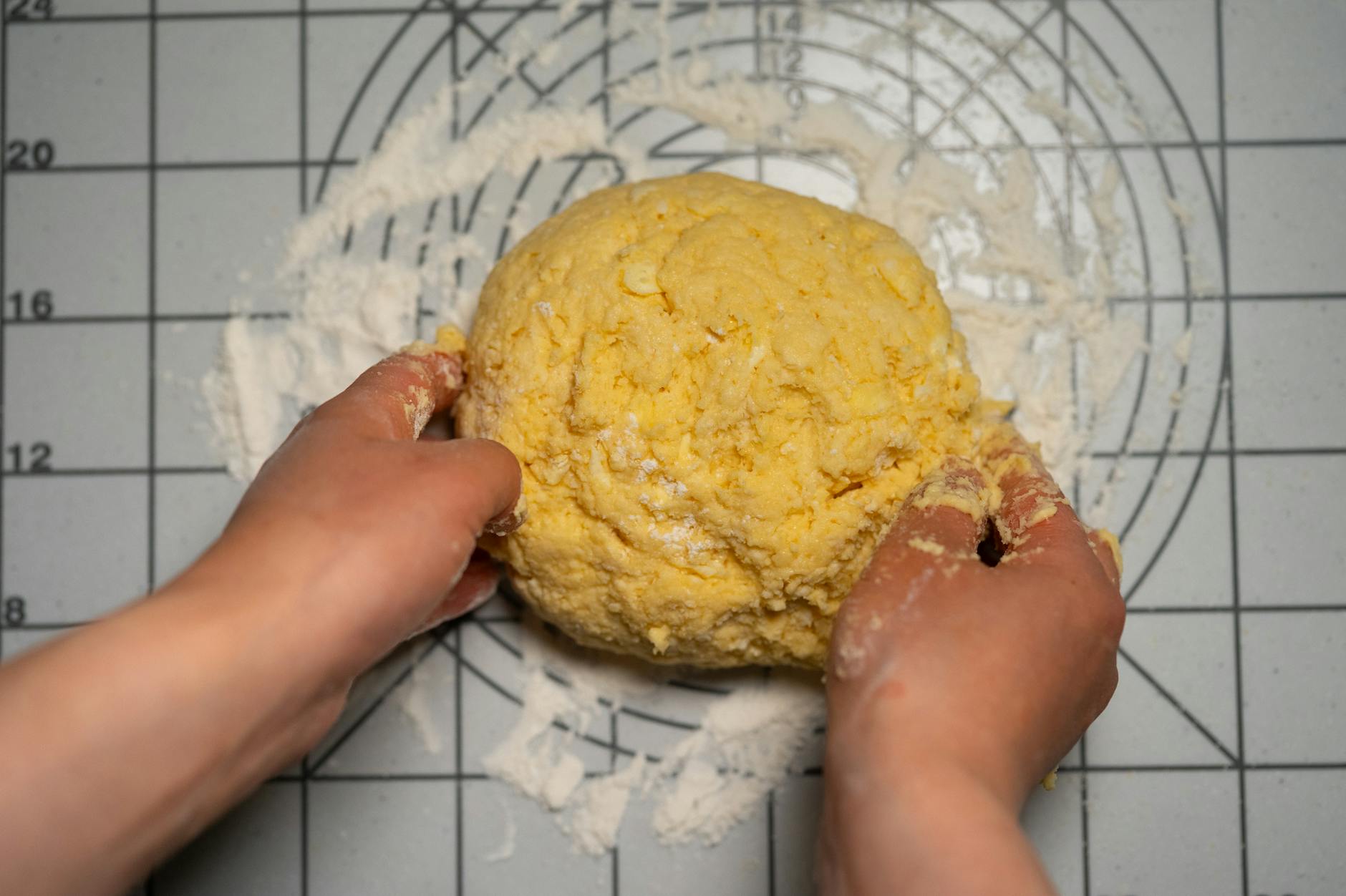
Once the mixture is too thick for a fork, scrape the remaining flour and the shaggy dough together with a bench scraper or your hands. Begin kneading the dough vigorously. The technique involves pushing the dough away from you with the heel of your hand, folding it back over, rotating it a quarter turn, and repeating. This process develops the gluten, which is essential for the pasta’s elasticity and chew. Continue kneading for 8-10 minutes, or until the dough transforms from a rough, sticky mass into a smooth, elastic, and uniform ball. It should feel firm but pliable, bouncing back slowly when gently poked. - Step 4: Rest the Dough for Relaxation
After kneading, lightly dust the smooth ball of dough with a tiny bit of flour, then wrap it tightly in plastic wrap. This prevents the dough from drying out and forming a crust. Place the wrapped dough in the refrigerator or at room temperature for at least 30 minutes, and up to 1 hour. Resting is a critical step; it allows the gluten network, which you developed during kneading, to relax. This relaxation makes the dough much easier to roll out thinly without tearing or springing back, resulting in a more tender and manageable pasta. - Step 5: Roll the Dough to Desired Thinness
Divide the rested dough into 2-4 equal portions, keeping the unused portions wrapped to prevent drying. Lightly flour your work surface and a portion of dough. If using a pasta machine, flatten the dough into an oblong shape and pass it through the widest setting (usually ‘1’). Fold the dough into thirds, flatten again, and pass it through the widest setting a second time. This helps to square off the edges and further develop gluten. Gradually increase the machine’s setting, passing the dough through each consecutive setting until it reaches your desired thickness. For fettuccine, settings 6 or 7 are typical; for ravioli or lasagna, settings 5 or 6 are often preferred to maintain some sturdiness. If using a rolling pin, roll the dough as thinly as possible, aiming for translucence, dusting with flour as needed to prevent sticking. - Step 6: Cut and Shape Your Fresh Pasta
Once your pasta sheets are rolled to the desired thinness, it’s time to shape them. For fettuccine, you can use the cutting attachments on your pasta machine or roll the sheet into a loose log and slice it by hand into ¼-inch (0.6 cm) wide strips. For ravioli, lay out your sheet, add dollops of filling, cover with another sheet, seal, and cut with a ravioli stamp or knife. For lasagna, simply cut the sheets into rectangular portions. Dust the cut pasta generously with semolina flour and arrange it in loose nests on a lightly floured baking sheet or hang it to dry slightly for 15-30 minutes before cooking. This prevents sticking and ensures a better texture when cooked.
Pro Tips for Perfect Results
Achieving truly perfect homemade pasta goes beyond just following the steps; it involves understanding the nuances and science behind each action. Here are some of my go-to tips.
• Tip 1: Hydration is Your Best Friend (and Biggest Variable): The exact amount of flour needed can fluctuate based on factors like humidity, the size of your eggs, and the type of flour used. Don’t rigidly stick to the measurement if your dough feels off. The goal is a dough that is firm, elastic, and only slightly tacky – not sticky or dry. If it’s too sticky, add a tiny bit more flour, a tablespoon at a time. If it’s too dry and crumbly, add a teaspoon of water or an egg white, incorporating it fully. I’ve found that trusting my intuition and the feel of the dough is more important than precise numbers here. The science behind this is that flour absorbs moisture differently; a precise recipe is a guide, but your hands are the ultimate gauge.
According to The Kitchn, mastering fundamental cooking techniques makes every recipe easier and more delicious.
• Tip 2: Knead with Purpose, Rest with Patience: These two steps are non-negotiable for tender, pliable pasta. Kneading vigorously for the full 8-10 minutes is essential for developing the gluten network, which gives the pasta its structure and elasticity. Without sufficient kneading, your pasta will be stiff and difficult to roll. Equally important is the resting period. During rest, the gluten strands relax, making the dough incredibly pliable and easy to roll out thinly without tearing or shrinking back. Skipping the rest will result in a tough, uncooperative dough that fights you every step of the way. Think of it as letting the dough “breathe” after its workout.
• Tip 3: Flour Strategically During Rolling: When rolling out your pasta sheets, especially with a machine, resist the urge to over-flour. Too much flour can dry out the dough, making it brittle and prone to cracking. Instead, use semolina flour sparingly to prevent sticking. Semolina’s coarser texture doesn’t get absorbed by the dough as readily as all-purpose flour, making it a superior choice for dusting. Only flour your dough and machine rollers just enough to ensure smooth passage. If your dough is slightly sticky, it usually indicates good hydration; a light dusting will suffice. One trick I have discovered is to lightly flour the dough and then brush off any excess with a pastry brush before feeding it through the rollers. For more delicious ideas, check out our vegetarian meal ideas section.
Variations and Substitutions
Once you’ve mastered the basic egg pasta dough, the possibilities for creative variations are endless! Here are a few ways to add color, flavor, and texture to your homemade pasta:
• 1. Herb-Infused Pasta: Elevate your dough by incorporating finely chopped fresh herbs. For a vibrant green and aromatic touch, add 2 tablespoons of finely minced fresh parsley, basil, or chives directly into the flour well with the eggs. The herbs will distribute beautifully throughout the dough as you knead, creating visually stunning pasta with a subtle herbaceous flavor that pairs wonderfully with light sauces or seafood.
According to Epicurious, mastering fundamental cooking techniques makes every recipe easier and more delicious.
• 2. Spinach Pasta (Pasta Verde): To make beautiful green pasta, blanch about 3-4 ounces (85-115g) of fresh spinach. Squeeze out as much excess water as possible, then purée it until smooth. Substitute one of the whole eggs with this spinach purée, adjusting the consistency with a tiny bit more flour if needed. The chlorophyll in the spinach lends a natural, earthy flavor and a striking color, perfect for richer cream sauces or simply with butter and Parmesan.
• 3. Whole Wheat or Semolina Blend: For a nuttier flavor and a slightly chewier texture, you can substitute a portion of the all-purpose flour with whole wheat flour or semolina flour. Start by replacing about ¼ to ⅓ cup of the all-purpose flour with your chosen alternative. Whole wheat pasta has a more rustic feel and pairs well with robust sauces, while adding semolina can enhance the pasta’s bite. Remember that whole wheat flour absorbs more liquid, so you might need a tiny splash of water.
• 4. Flavorful Liquid and Color Infusions: Experiment with liquids other than just egg. For a striking red pasta, replace one egg with 2-3 tablespoons of beet juice (freshly juiced or from canned beets). For a delicate orange hue and subtle flavor, infuse a small amount of water (about 1-2 tablespoons) with a pinch of saffron threads, then add this liquid to the dough. These natural colorants not only make your pasta visually appealing but also introduce nuanced flavors.
Frequently Asked Questions
Can I make this pasta dough without a pasta machine?
Absolutely! While a pasta machine makes the process quicker and helps achieve consistent thinness, you can certainly make beautiful pasta with just a good old-fashioned rolling pin and some elbow grease. The key is patience and a well-floured surface. Divide your dough into smaller, more manageable portions, and roll each piece out as thinly as possible, constantly rotating and flipping the dough. Aim for a thickness that allows you to almost see your hand through it. This takes practice but is incredibly satisfying. Once rolled, you can hand-cut your pasta into fettuccine, pappardelle, or lasagna sheets with a sharp knife.
How long can I store fresh pasta dough, and how do I store it?
Fresh pasta dough can be stored in the refrigerator for 1-2 days. It’s crucial to wrap it very tightly in plastic wrap, ensuring no air can reach it, as air will dry out the dough and cause it to oxidize (turn grey). Before using, let it come to room temperature for about 30 minutes. For longer storage, you can freeze the dough for up to 1 month. Again, wrap it extremely well in multiple layers of plastic wrap, possibly even an extra layer of foil, to prevent freezer burn. Thaw it overnight in the refrigerator, then let it sit at room temperature for an hour before rolling.
Can I make this recipe gluten-free or egg-free?
Adapting this classic egg pasta recipe for gluten-free or egg-free diets is possible, but it’s important to manage expectations regarding the final texture and workability. For a gluten-free version, you’ll need to use a specific gluten-free all-purpose flour blend, preferably one designed for baking or pasta that often contains xanthan gum. The dough might be less elastic and more delicate, requiring careful handling. For an egg-free version, you can substitute the eggs with an equal weight of water or plant-based milk, and a tablespoon of olive oil, or use commercial egg replacers. However, the richness, color, and unique tender chew of traditional egg pasta will be significantly altered in both cases.
Final Thoughts
There’s something truly magical about transforming humble flour and eggs into delicate, tender strands of pasta. It’s a culinary journey that rewards you not just with an incredible meal, but with a deeper connection to the food you eat and the joy of creation. I encourage you to set aside an afternoon, roll up your sleeves, and dive into the satisfying world of homemade fresh pasta dough. Whether you shape it into elegant fettuccine, hearty ravioli, or luscious lasagna sheets, the effort is undeniably worth it. The taste, the texture, the sheer satisfaction – it’s an experience that nourishes both body and soul. Happy cooking, and bon appétit!