


🍳 In This Article
- The Rich History and Cultural Roots of This Dish
- Why This Recipe Works: The Food Science Behind It
- Complete Ingredient Breakdown
- Step-by-Step Instructions
- Expert Tips from Years of Kitchen Experience
- Nutritional Benefits and Health Insights
- Creative Variations and Dietary Adaptations
- Frequently Asked Questions
- Final Thoughts
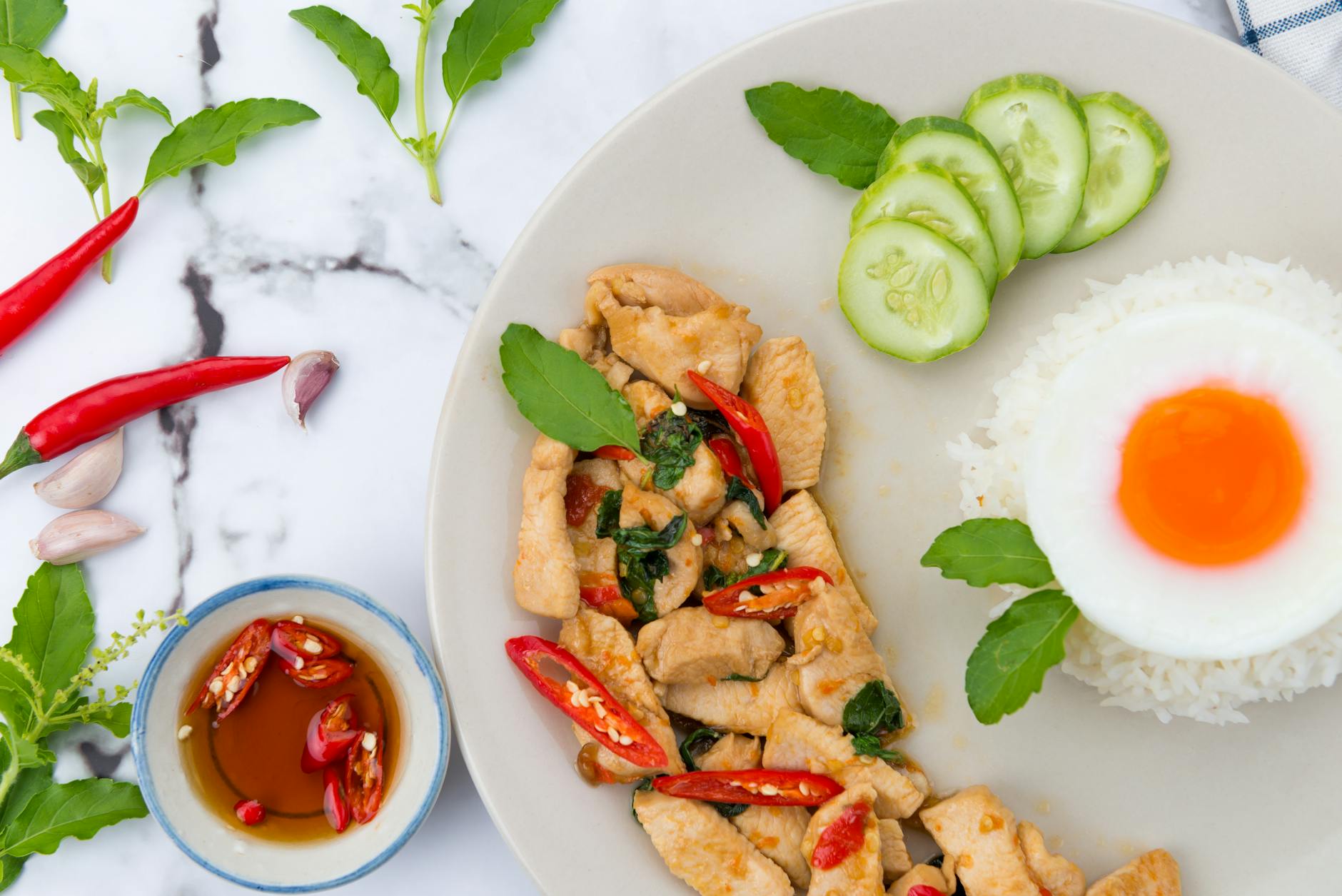
If you find yourself standing on a humid street corner in Bangkok at noon, the sound you will hear above the roar of motorbikes is the rhythmic, metallic “clack-clack-clack” of steel spatulas hitting carbon steel woks. This is the sound of Pad Krapow being born. To the uninitiated, it looks like a simple stir-fry of ground meat and greens. To the Thai people, it is “the dish you order when you don’t know what to order”—the ultimate comfort food, the undisputed king of street lunches. The magic of this dish lies not in its complexity, but in its intensity. It is a violent, beautiful marriage of searing heat, pungent garlic, and the unmistakable, peppery clove-scent of holy basil. When done correctly, the meat is caramelized and savory, the basil is wilted but vibrant, and the whole experience is elevated by a crispy-edged fried egg that provides a rich, runny yolk to temper the fire of the chilies.
The Rich History and Cultural Roots of This Dish
While many Thai classics like Massaman curry have roots stretching back centuries, Pad Krapow is a relatively modern icon. Culinary historians often point to the mid-20th century as the era when this dish rose to prominence. During the 1940s and 50s, the Thai government, led by Field Marshal Plaek Phibunsongkhram, promoted a sense of national identity through food. This era saw the rise of Pad Thai, but it also encouraged the “one-plate” meal culture (known as *Ahan Jan Diao*). Pad Krapow fit this mold perfectly: it was fast, utilized local ingredients, and provided a high-protein meal for a burgeoning working class. It represented a shift from traditional communal dining toward a more individualized, fast-paced urban lifestyle.
The name itself tells you everything you need to know about the dish’s soul. “Pad” means stir-fried, and “Krapow” is the Thai word for holy basil (*Ocimum tenuiflorum*). Interestingly, early versions of the dish were often more “wet” and included ingredients that purists today might scoff at, such as baby corn, long beans, or even carrots. However, as the dish evolved through the decades, a “dry” style became the gold standard in Bangkok. This version focuses strictly on the meat, the aromatics, and the basil, ensuring that the flavors are concentrated rather than diluted by vegetable moisture. It is a testament to the Thai culinary philosophy of balancing the four pillars of flavor: salty, sweet, spicy, and sour.
Culturally, Pad Krapow occupies a unique space. It is the great equalizer. You will see high-ranking business executives in tailored suits sitting on plastic stools next to motorcycle taxi drivers, both hunched over the same steaming plate of basil chicken. It is often served *Kai Dao* (with a fried egg), which is not just an add-on but a structural necessity. The egg is traditionally deep-fried in a significant amount of oil until the edges are brown and “lacey,” providing a textural contrast to the tender meat and a fat-based coolant for the capsaicin-heavy sauce. To eat Pad Krapow without the egg is, in many circles, considered a culinary half-measure.
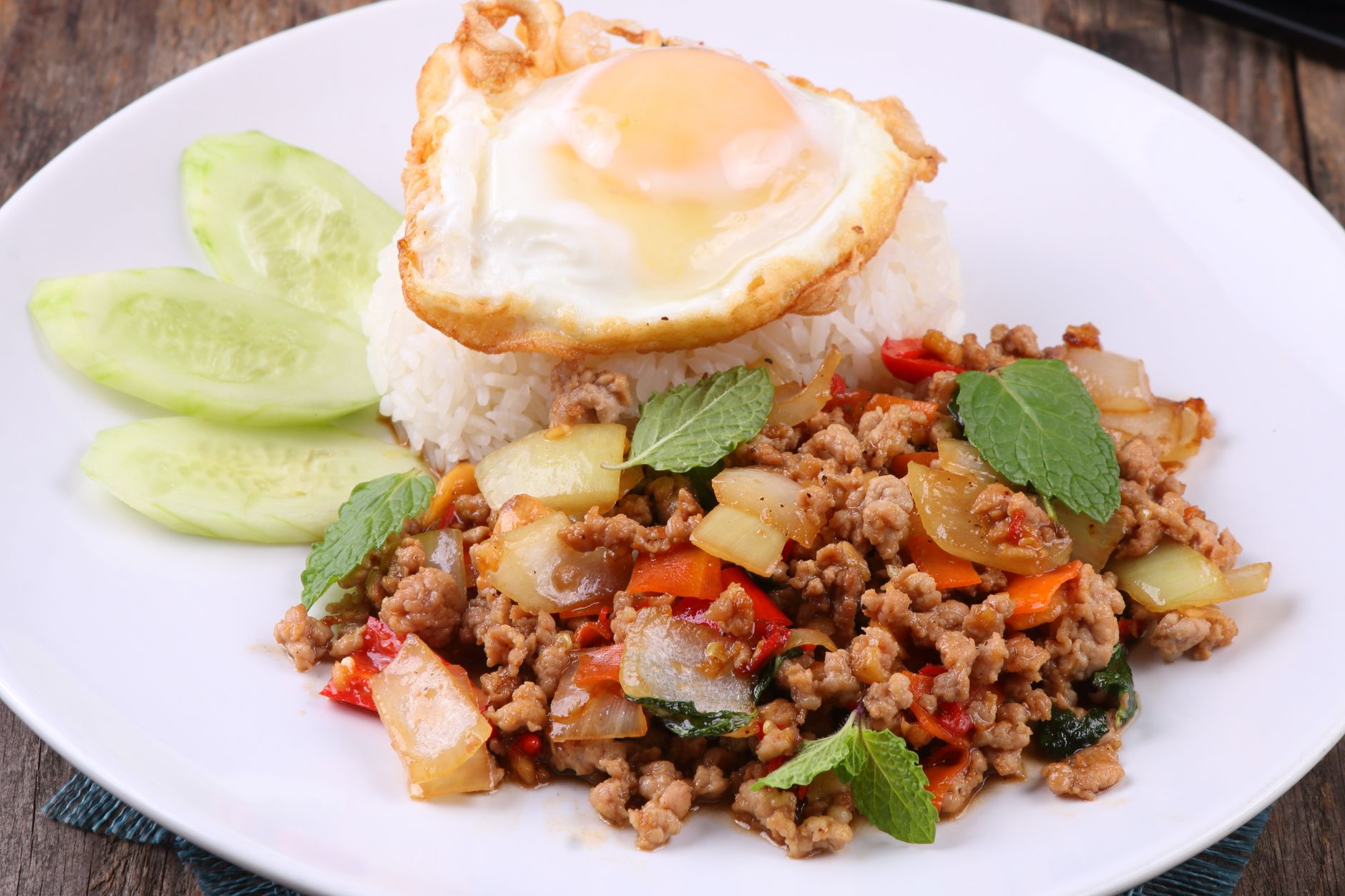
📷 Photo by UNDO KIM on Pexels — Free to use under the Pexels License
Why This Recipe Works: The Food Science Behind It
The success of a 20-minute Pad Krapow relies heavily on the Maillard reaction. This is the chemical reaction between amino acids and reducing sugars that gives browned food its distinctive, savory flavor. When you toss 500 grams of ground chicken into a wok heated to approximately 400°F (200°C), you aren’t just cooking it; you are creating hundreds of different flavor compounds. For this to work, the wok must be screaming hot. If the temperature is too low, the chicken will release its juices and boil in its own liquid, resulting in a grey, rubbery texture rather than the crispy, deeply browned bits that characterize a professional stir-fry.
According to National Institutes of Health (NIH), vitamin and mineral research plays an important role in understanding food preparation and nutrition.
Another critical scientific element is the emulsification of the sauce. The traditional seasoning for Pad Krapow involves a mixture of oyster sauce, soy sauce, and fish sauce. As the chicken cooks, it renders out a small amount of fat. When you add the liquid seasonings and a splash of water or broth, the vigorous tossing action in the hot wok creates a temporary emulsion. The sugars in the dark soy sauce caramelize, thickening the liquid into a glossy glaze that clings to every morsel of meat. This ensures that the flavor isn’t sitting at the bottom of the plate but is instead integrated into every bite.
Finally, we must consider the volatile oils in the holy basil. Holy basil contains high levels of eugenol, the same compound found in cloves. These aromatic compounds are extremely heat-sensitive. If you cook the basil for too long, the eugenol evaporates, and you’re left with nothing but soggy leaves. This is why the basil is always added at the very last second, after the heat has been turned off. The residual heat of the meat is just enough to wilt the leaves and release their perfume without destroying the delicate chemical structure that gives the dish its signature peppery kick.
Complete Ingredient Breakdown
To achieve an authentic flavor, you must be selective with your pantry. Here is what you will need for a standard four-serving batch:
According to American Heart Association, heart-healthy cooking guidance plays an important role in understanding food preparation and nutrition.
- The Protein: 500g (approx. 1.1 lbs) of ground chicken. I prefer chicken thighs for this, as the higher fat content (around 15-20%) prevents the meat from drying out during the high-heat stir-fry. If using breast meat, add an extra teaspoon of oil.
- The Holy Basil: 2 cups (tightly packed) of fresh Holy Basil. Note: This is NOT the same as Italian basil or even Thai Sweet Basil (Horapa). Holy basil has a serrated leaf and a spicy, clove-like aroma. If you absolutely cannot find it, Thai Sweet Basil is a secondary substitute, but the flavor profile will shift toward anise/licorice.
- The Aromatics: 6-8 cloves of garlic and 5-10 Thai Bird’s Eye chilies. The number of chilies depends on your heat tolerance, but authentic Pad Krapow should be “phet” (spicy). I love adding a pinch of salt to these while pounding them in a mortar and pestle to help break down the fibers into a paste.
- The Liquid Gold (Sauce): 2 tablespoons oyster sauce (for umami and body), 1 tablespoon light soy sauce (for salt), 1 teaspoon dark soy sauce (primarily for that deep caramel color), and 1 tablespoon fish sauce (for the essential fermented funk).
- The Sweetener: 1 teaspoon of palm sugar or brown sugar. This isn’t meant to make the dish sweet; it’s there to provide a “bridge” between the salt of the fish sauce and the heat of the chilies.
- The Egg: 4 large eggs and about 1/2 cup of neutral oil (canola or grapeseed) for deep-frying.
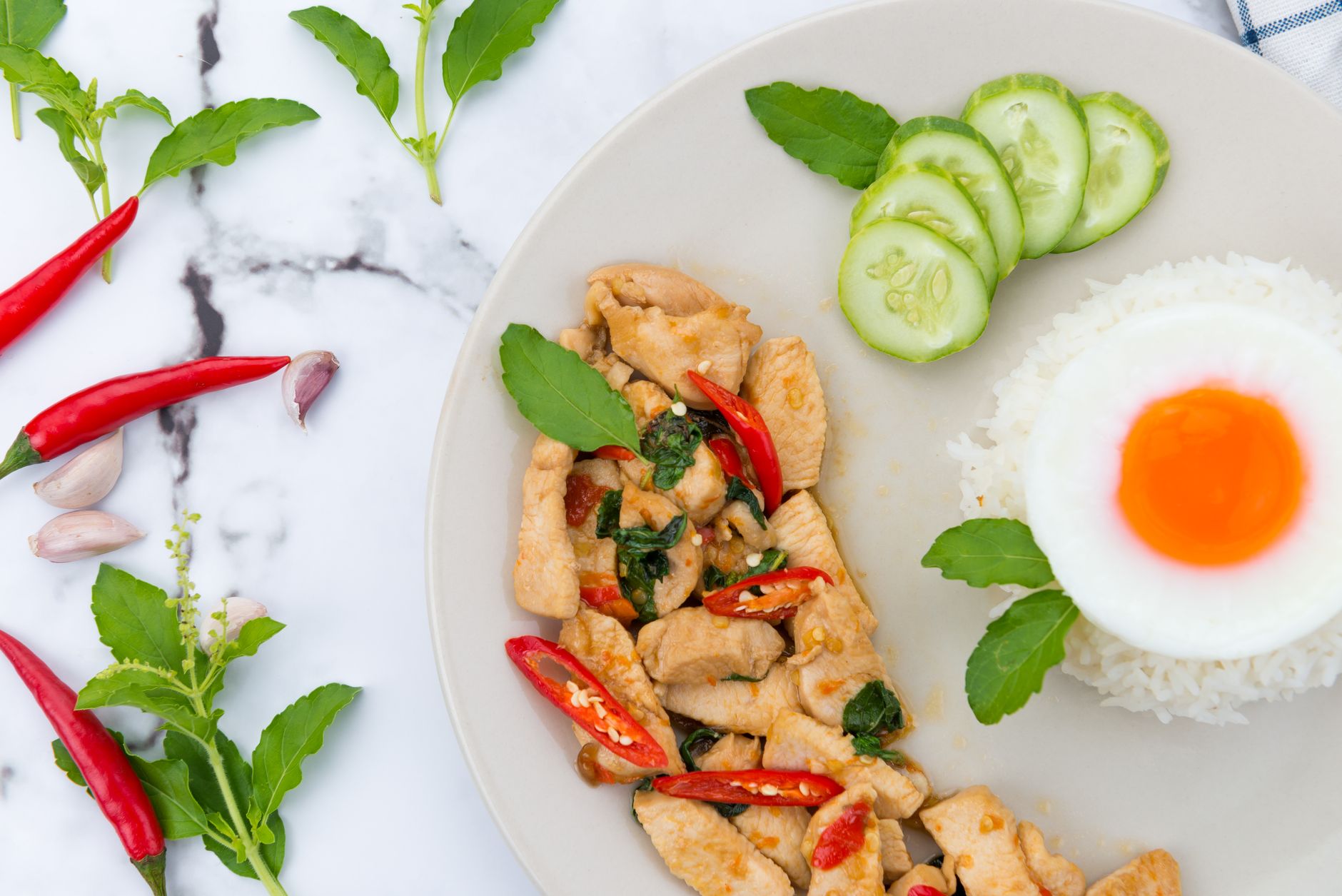
📷 Photo by Manit Seekhao on Pexels — Free to use under the Pexels License
Step-by-Step Instructions
Before you even turn on the stove, ensure your *mise en place* is perfect. Stir-frying happens too fast for you to be chopping garlic while the chicken is in the pan. Have everything measured and within arm’s reach. For more delicious ideas, explore our easy lunch ideas collection.
- Step 1 — The Prik Gaeng (Chili-Garlic Paste): Place your peeled garlic cloves and bird’s eye chilies in a mortar and pestle. Pound them until they form a coarse, jagged paste. You don’t want a smooth purée; having small chunks of garlic that can brown and crispy bits of chili skin adds to the texture of the final dish.
- Step 2 — The “Kai Dao” (The Crispy Egg): Heat 1/2 cup of oil in your wok over medium-high heat until it begins to shimmer (around 350°F/175°C). Crack an egg into a small bowl, then carefully slide it into the hot oil. The whites should bubble and puff up immediately. Use a spoon to splash hot oil over the top of the egg to cook the white around the yolk, but keep the yolk runny. Once the edges are dark golden brown and crispy, remove and set aside on paper towels.
- Step 3 — Searing the Aromatics: Pour out most of the oil from the wok, leaving about 2 tablespoons. Turn the heat to high. Add your chili-garlic paste. Stir-fry for only 15-30 seconds. You want the garlic to turn golden and the chili to become fragrant, but do not let it burn, or it will turn bitter.
- Step 4 — The Maillard Sear: Add the ground chicken to the wok. Use your spatula to break the meat into small crumbles. Spread the meat out against the surface of the wok and let it sit undisturbed for 45-60 seconds to develop a deep brown crust. This is where the flavor lives. Stir and repeat until the chicken is about 90% cooked through.
- Step 5 — Deglazing and Seasoning: Pour in your pre-mixed sauce (oyster sauce, soy sauces, fish sauce, and sugar). Stir vigorously to coat every piece of chicken. The liquid will hit the hot wok and immediately begin to reduce and thicken, creating a savory glaze. If the pan looks too dry, add a tablespoon of water or chicken stock.
- Step 6 — The Final Wilt: Turn off the heat. This is crucial. Immediately throw in the 2 cups of holy basil. Toss the mixture for 30 seconds. The residual heat from the chicken and the wok will wilt the basil just enough to release its oils without losing its vibrant green color or its peppery punch. Serve immediately over hot jasmine rice with the fried egg on top.
Expert Tips from Years of Kitchen Experience
After years of experimenting with this dish, from the street stalls of Chiang Mai to my own professional kitchen, I’ve learned that the difference between a “good” Pad Krapow and a “transcendent” one comes down to three things: heat, hydration, and the basil itself.
- Temperature Control: Most home stoves don’t produce the “Wok Hei” (breath of the wok) that commercial burners do. To compensate, use a heavy carbon steel wok or a cast-iron skillet. These materials retain heat better, allowing you to maintain those high temperatures even when the cold meat hits the pan. If you see steam instead of smoke, your pan isn’t hot enough.
- Ingredient Quality: Freshness is non-negotiable here. Because there are so few ingredients, each one must be at its peak. Use fresh garlic, not the pre-peeled jars. Use real Thai fish sauce (look for brands with high protein content on the label). And most importantly, find real holy basil. One trick I discovered: if you can’t find holy basil at the market, many nurseries sell “Tulsi” plants, which is the exact same species.
- Timing and Patience: Don’t rush the browning of the meat. Many home cooks stir too much, which prevents the Maillard reaction from occurring. Let the meat sit and sizzle. That “crust” on the ground chicken is the secret to the savory depth that makes street-side Pad Krapow so addictive.
- Seasoning Balance: Always taste a small bit of the chicken before adding the basil. If it’s too salty, a tiny extra pinch of sugar will fix it. If it lacks “punch,” a few extra drops of fish sauce will provide the necessary salinity and depth.
Nutritional Benefits and Health Insights
From a nutritional standpoint, Pad Krapow is a powerhouse of lean protein and metabolism-boosting compounds. A standard serving (using chicken breast) contains approximately 350-400 calories and provides nearly 35 grams of high-quality protein. This makes it an excellent choice for muscle recovery and satiety. The chicken also provides essential B-vitamins, particularly B6 and B12, which are vital for energy metabolism and neurological health.
The “functional” ingredients in this dish offer significant health perks. Capsaicin, the active component in bird’s eye chilies, has been shown in clinical studies to temporarily increase metabolic rate and promote the release of endorphins—the “feel-good” hormones. Furthermore, holy basil is revered in Ayurvedic medicine as an “adaptogen,” a substance that helps the body respond to stress. It contains high levels of Vitamin K, which is essential for bone health and blood clotting, and antioxidants like orientin and vicenin, which protect cells from oxidative damage.
For those watching their sodium intake, you can easily adapt this dish by using low-sodium soy sauce and reducing the fish sauce by half, replacing the lost volume with a splash of lime juice. The acidity of the lime won’t mimic the salt, but it will brighten the flavors so effectively that you won’t miss the extra sodium. To make it gluten-free, simply ensure your oyster sauce and soy sauces are certified gluten-free (Tamari is a great substitute for light soy sauce). For more delicious ideas, explore our cooking tips and guides collection.
Creative Variations and Dietary Adaptations
While chicken is the most common protein, the “Krapow” technique can be applied to almost anything. Here are a few ways to mix it up:
- Krapow Moo Krob (Crispy Pork Belly): Instead of ground meat, use slices of crispy roasted pork belly. The rendered pork fat mixes with the sauce to create an incredibly indulgent, rich version of the dish.
- Vegan Tofu & Mushroom Krapow: Use extra-firm tofu crumbled to the consistency of ground meat, and add finely chopped king oyster mushrooms for a “meaty” texture. Swap the fish sauce for a vegan “no-fish” sauce or a combination of salt and light soy sauce.
- The Seafood Twist: Use peeled shrimp or rings of calamari. Seafood cooks much faster, so you only need about 2 minutes of total stir-fry time to keep the texture tender and succulent.
- The “Jungle” Style: In some Thai regions, they add fresh green peppercorns and sliced fingerroot (krachai) to the stir-fry. This adds an earthy, medicinal depth that is incredibly complex and bracingly spicy.
Frequently Asked Questions
Why does my basil turn black and slimy?
This is caused by oxidation and overcooking. Basil is a delicate herb. If you add it while the wok is still over high heat, the cell walls collapse instantly, and the leaves turn black. Always turn off the heat before adding the basil. The residual heat is plenty to wilt it while keeping the color green and the flavor fresh.
Can I use dried basil if I can’t find fresh?
In a word: No. Dried basil has a completely different chemical profile and lacks the volatile oils that define Pad Krapow. If you cannot find any fresh basil, you are better off making a different stir-fry entirely, perhaps a ginger-based one, rather than trying to substitute with dried herbs.
How do I store and reheat leftovers?
Pad Krapow stores surprisingly well in an airtight container for up to 3 days in the refrigerator. However, the fried egg does not reheat well—it becomes rubbery. I recommend eating the leftovers with a freshly fried egg. To reheat the chicken, use a microwave for 60 seconds or a quick toss in a hot pan with a teaspoon of water to loosen the sauce.
Is it supposed to be this oily?
Traditional Thai street food uses a fair amount of oil because it helps conduct heat and prevents the lean meat from sticking to the wok. It also helps the sauce emulsify. If you prefer a leaner version, you can reduce the oil to 1 tablespoon, but you may need to add a bit more water or broth to prevent the meat from scorching.
Final Thoughts
Cooking Pad Krapow is more than just following a recipe; it is about learning to trust your senses. You listen for the sizzle of the chicken, you watch for the garlic to turn that perfect shade of pale gold, and you smell the exact moment the holy basil releases its perfume. It is a dish that rewards boldness—don’t be afraid of the high heat, and certainly don’t be afraid of the chilies. Every time I make this in my own kitchen, I am transported back to the bustling streets of Bangkok. It is a reminder that the best food doesn’t need to be complicated; it just needs to be cooked with intention and a little bit of fire. I hope this guide empowers you to bring a piece of that vibrant Thai spirit into your own home. Happy cooking!