


🍳 In This Article
- The Rich History and Cultural Roots of This Dish
- Why This Recipe Works: The Food Science Behind It
- Complete Ingredient Breakdown
- Step-by-Step Instructions
- Expert Tips from Years of Kitchen Experience
- Nutritional Benefits and Health Insights
- Creative Variations and Dietary Adaptations
- Frequently Asked Questions
- Final Thoughts
There is a specific, fleeting moment in the life of a perfectly constructed acai bowl that I like to call the “purple gold” phase. It is that window of time, usually lasting no more than ten minutes, where the texture is exactly halfway between a firm sorbet and a silk-spun mousse. If you’ve ever ordered a bowl at a high-end juice bar, you know the frustration of trying to replicate that density at home, only to end up with a purple soup that looks more like a melted popsicle than a meal. After years of experimenting in test kitchens and researching the molecular structure of frozen fruit, I’ve realized that the “perfect” acai bowl isn’t just a recipe—it’s an exercise in thermal dynamics and emulsification. When you strike that balance of frozen solids and minimal liquids, the result is a nutrient-dense powerhouse that feels like an indulgence but fuels you like a professional athlete’s breakfast.
The Rich History and Cultural Roots of This Dish
The story of acai begins long before it became a neon-lit staple of Southern California surf culture or an Instagram sensation. The acai palm (Euterpe oleracea) is native to the swamplands of the Amazon River basin. For centuries, the small, dark purple drupe was a dietary cornerstone for the Ribeirinhos, the traditional populations living along the riverbanks. Interestingly, in its ancestral home of Northern Brazil, specifically in the state of Pará, acai is rarely consumed as a sweet treat. It is traditionally served as a savory accompaniment to fried fish or shrimp, often thickened with manioc (cassava) flour. This traditional preparation highlights the fruit’s earthy, almost metallic flavor profile, which is naturally very low in sugar and high in healthy fats.
The transition of acai from a regional Amazonian staple to a global “superfood” began in the 1970s and 80s. Legend has it that Carlos Gracie, a key figure in the development of Brazilian Jiu-Jitsu, popularized the “Gracie Diet,” which featured acai blended with bananas to provide sustained energy for fighters. This version—sweetened and frozen—migrated from the Amazon to the juice bars of Rio de Janeiro. By the time it reached the beaches of Ipanema and Copacabana, it had evolved into the “Açaí na Tigela” (Acai in the bowl) that we recognize today, topped with granola and sliced bananas to satisfy the active, health-conscious crowds of the city.
Global expansion followed in the early 2000s when American entrepreneurs began importing the frozen pulp. However, something was lost in translation as it moved across borders. Many commercial versions became laden with apple juice bases and corn-syrup-heavy granolas. Reclaiming the dish means looking back at its Brazilian roots while utilizing modern food science to achieve that iconic texture. Understanding that acai is essentially a “fatty fruit”—similar to an avocado in its lipid structure—is the first step in appreciating why it behaves differently in a blender than a strawberry or a blueberry might.
Today, acai represents a complex intersection of indigenous knowledge, environmental conservation, and global health trends. When we prepare a bowl, we are participating in a culinary lineage that spans from the deep Amazonian canopy to the modern high-speed blender. It is a testament to the fruit’s versatility that it can serve as a savory dinner side in Belém and a refreshing breakfast in London or New York, all while maintaining its status as one of the most antioxidant-dense foods on the planet.

📷 Photo by 陈 欣茹 on Pexels — Free to use under the Pexels License
Why This Recipe Works: The Food Science Behind It
The secret to a world-class acai bowl lies in managing the “glassy state” of frozen fruit and the principles of emulsification. Acai pulp is unique because it contains approximately 50% fat (on a dry matter basis), mostly in the form of oleic and linoleic acids. This high fat content is crucial; when blended, these lipids act as emulsifiers, trapping air and creating a creamy mouthfeel that water-based fruits cannot achieve. When you combine acai with frozen bananas, you are introducing pectin and starches. As the banana breaks down, these long-chain polysaccharides create a structural matrix that prevents the mixture from collapsing into a liquid, resulting in that sought-after “soft-serve” consistency.
According to World Health Organization (WHO), dietary guidelines and healthy eating plays an important role in understanding food preparation and nutrition.
Another critical factor is the “heat of friction.” High-speed blenders operate at upwards of 20,000 RPM. At these speeds, the blades generate significant heat, which can quickly melt the delicate ice crystals in your frozen fruit. This is why the “tamper” is your best friend. By manually pushing the frozen chunks into the blades, you minimize the blending time required, thereby reducing heat transfer. I’ve found that the ideal temperature for an acai base is roughly -5°C (23°F). At this temperature, the water content remains mostly frozen, but the fat and sugar content allow for a malleable, scoopable texture.
Finally, we must consider the role of viscosity. A common mistake is adding too much liquid (like almond milk or coconut water) at the start. To achieve a thick bowl, you want the lowest possible liquid-to-solid ratio. The liquid should only serve as a “primer” to get the blades moving. Once the frozen fruit begins to shear, the cellular walls break down, releasing internal moisture that further aids the blending process. This is a classic example of shear-thinning behavior, where a substance becomes less viscous as it is agitated. Understanding this allows you to resist the urge to pour in more juice, ensuring your toppings don’t sink to the bottom of the bowl.
Complete Ingredient Breakdown
To create a professional-grade acai bowl, you need to select ingredients based on their functional properties as much as their flavor. Here is what I keep in my pantry and freezer for the ultimate build:
According to National Institutes of Health (NIH), vitamin and mineral research plays an important role in understanding food preparation and nutrition.
- Frozen Acai Puree (200g / 2 packets): Look for “unsweetened” or “pure” acai. This gives you total control over the glycemic load. The deep purple color comes from anthocyanins, which are potent antioxidants. If you use the sweetened versions, you’ll lose that deep, earthy complexity.
- Frozen Bananas (150g / approx. 1.5 medium bananas): Bananas are the structural backbone. For the best results, use “overripe” bananas (the ones with brown spots). As a banana ripens, its starches convert to sugars and its pectin softens, which translates to a smoother, sweeter, and more cohesive blend once frozen.
- Frozen Blueberries (50g / 1/2 cup): These add a secondary layer of color and a tart acidity that cuts through the richness of the acai fats. Blueberries also contain high levels of vitamin C and fiber.
- Liquid Base (60ml – 80ml / 1/4 to 1/3 cup): I prefer unsweetened vanilla almond milk or coconut water. The goal is to use the absolute minimum required to get your blender moving. Coconut water adds electrolytes like potassium, while almond milk adds a subtle nuttiness.
- Nut Butter (1 tablespoon): Adding a dollop of almond or peanut butter into the blend introduces additional lipids and proteins. This helps with satiety and further stabilizes the emulsion, making the bowl feel “heavier” and more satisfying.
- Toppings (The Texture Layer):
- Granola (30g): Look for a sprout-grain or nut-based granola for a lower glycemic index and a satisfying “crunch” that contrasts with the smooth base.
- Fresh Berries: Sliced strawberries and raspberries add “top-note” acidity and fresh enzymes.
- Hemp Seeds or Chia Seeds: These are “nutrition boosters,” adding Omega-3 fatty acids and a slight nutty texture.
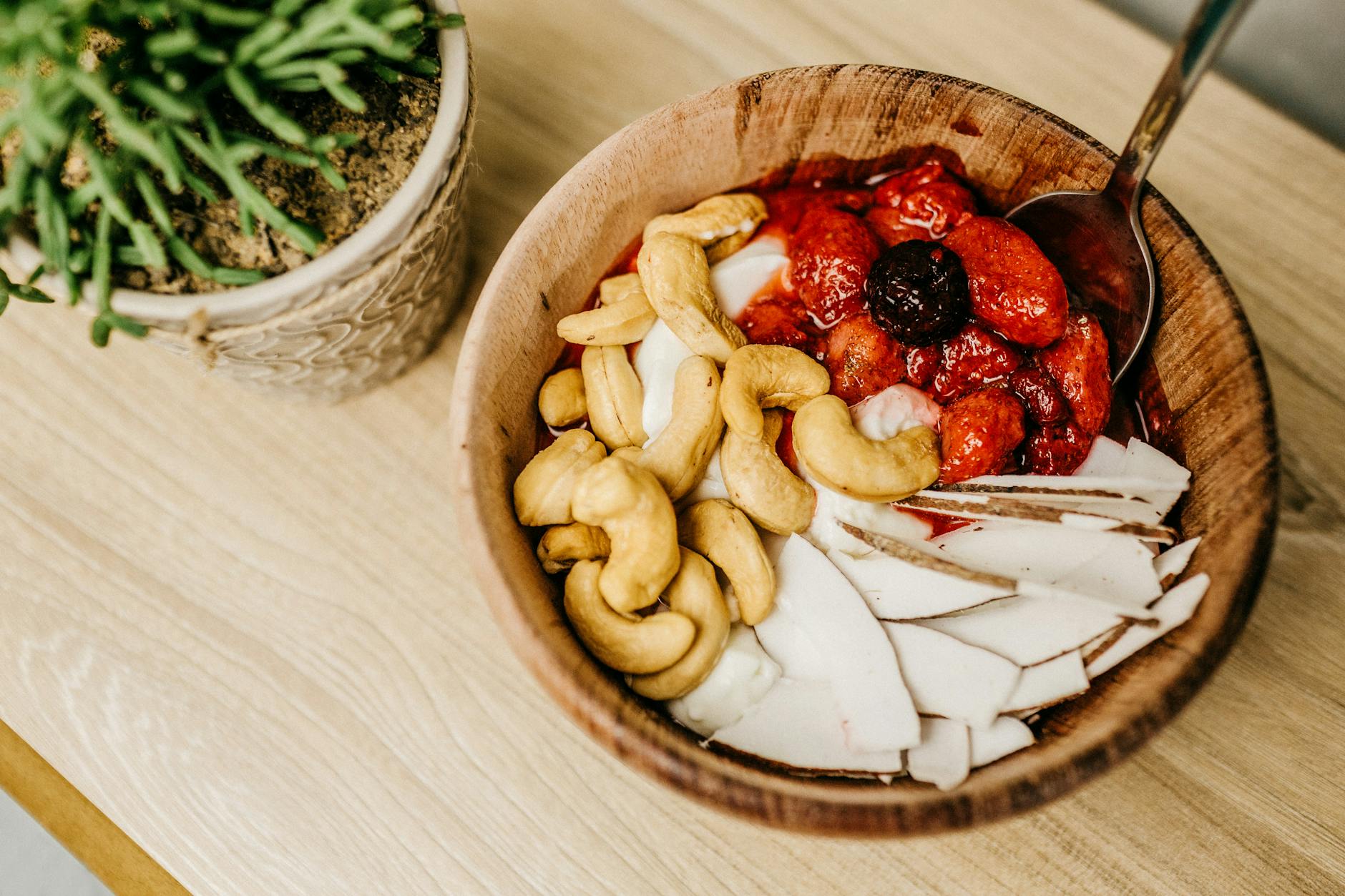
- Unsweetened Coconut Flakes: These provide a hit of medium-chain triglycerides (MCTs) and a tropical aroma.

📷 Photo by Ralitsa Racheva on Pexels — Free to use under the Pexels License
Step-by-Step Instructions
Before you begin, ensure your blender jar is clean and, if possible, chilled in the freezer for 10 minutes. This prevents the plastic or glass from transferring ambient heat to your ingredients. Preparation is everything when you are working against the clock of melting ice. For more delicious ideas, explore our healthy dinner recipes collection.
- Step 1 — Prepare the Fruit: Take your frozen acai packets and run them under warm water for exactly 10 seconds. This “tempering” allows you to break the frozen block into 4 or 5 smaller chunks inside the plastic before cutting it open. If the chunks are too large, they can bridge over the blender blades, causing them to spin aimlessly.
- Step 2 — Layering for Success: Add your liquid base to the blender first. Follow this with the nut butter and any powders (like protein or cacao). Finally, add the heavy hitters: the frozen banana chunks and the broken-up acai. Placing the solids on top of the liquid creates the necessary weight to push the ingredients down into the “vortex” once the motor starts.
- Step 3 — The Low-Speed Start: Start your blender on the lowest possible speed. You will hear a growling sound—this is normal. Use your tamper tool to aggressively push the frozen fruit into the corners and down toward the blades. Do not be afraid to use some muscle here; the goal is to force the ingredients to engage with the blade without adding more liquid.
- Step 4 — Increasing the Shear: Once the mixture looks like coarse gravel, increase the speed to medium-high. You should see the “four-quadrant vortex” form, where the mixture pulls down in the center and pushes up the sides. If the blades spin freely without moving the fruit (cavitation), stop the blender, stir manually to remove air pockets, and try again.
- Step 5 — The Final Polish: Blend on high for only 15-20 seconds. You are looking for a texture that resembles thick, purple soft-serve ice cream. As soon as the last lumps disappear, stop. Over-blending is the primary cause of runny acai bowls due to the heat generated by the motor.
- Step 6 — Assembly and Architecture: Transfer the base to a chilled bowl immediately. Use the back of a spoon to create a flat surface or a slight “well” in the center. Add your granola first (it acts as a foundation), then layer your fresh fruits, seeds, and coconut. Serve immediately while the base is still holding its peaks.
Expert Tips from Years of Kitchen Experience
Achieving a café-quality bowl at home requires more than just following a recipe; it requires an understanding of the nuances of your equipment and ingredients. After hundreds of bowls, these are the “pro-level” adjustments that make all the difference.
- Temperature Control: I cannot stress enough the importance of frozen ingredients. Your bananas should be rock-solid, not “semi-frozen.” If you find your bowls are consistently too thin, try freezing your liquid base into ice cubes. Using almond milk ice cubes instead of liquid milk allows you to achieve a much thicker consistency while still providing the necessary moisture for the blades to catch.
- Ingredient Quality: Not all acai is created equal. Some brands dilute their puree with water or lime juice before freezing. Check the ingredient label; the first ingredient should be “Organic Acai Puree.” If water is listed first, you’ll struggle to get a thick texture because the ice crystals will be too large and will melt too quickly.
- Timing and Patience: One trick I discovered is to let the frozen acai packets sit on the counter for about 3 minutes before blending. This very slight softening (tempering) allows the blades to “bite” into the fruit more effectively, which actually results in a smoother blend with less total blending time. It’s counter-intuitive, but a 3-minute thaw can prevent a 5-minute struggle with the blender.
- Seasoning Balance: Acai is naturally very earthy and can sometimes taste slightly “dusty” to the uninitiated. A tiny pinch of high-quality sea salt (like Maldon) can work wonders. Salt suppresses bitterness and enhances the perception of sweetness in the fruit, making the whole bowl taste more vibrant without needing extra honey or agave.
Nutritional Benefits and Health Insights
The acai bowl is often touted as a nutritional miracle, and while “superfood” is a marketing term, the data behind acai is genuinely impressive. A standard 100g serving of pure acai puree contains approximately 70 calories, 5 grams of fat (mostly healthy monounsaturated fats), and 4 grams of fiber. What truly sets it apart is its ORAC (Oxygen Radical Absorbance Capacity) score. Acai has one of the highest antioxidant ratings in the world, largely due to its anthocyanin content—the same pigments found in red wine, but in much higher concentrations. These compounds help combat oxidative stress and may support cardiovascular health by improving cholesterol profiles.
From a macronutrient perspective, the combination of healthy fats from the acai and nut butter, complex carbohydrates from the granola, and fiber from the berries creates a “slow-burn” energy source. Unlike a sugary cereal or a refined-flour bagel, which cause a rapid spike in blood glucose followed by a crash, a well-balanced acai bowl provides sustained satiety. The fiber content (often exceeding 10g per bowl depending on toppings) slows the absorption of sugars from the fruit, making it a surprisingly balanced meal for those monitoring their blood sugar levels.
For those with dietary restrictions, the acai bowl is a chameleon. It is naturally gluten-free (provided you choose a GF-certified granola) and vegan. To boost the protein content, which is naturally low in acai (about 1g per 100g), I often recommend adding a scoop of high-quality pea or hemp protein. This transforms the bowl from a light breakfast into a comprehensive post-workout recovery meal, providing the necessary amino acids for muscle repair alongside the anti-inflammatory antioxidants of the berries. For more delicious ideas, explore our vegetarian meal ideas collection.
Creative Variations and Dietary Adaptations
Once you master the base, the possibilities for customization are endless. Here are four of my favorite ways to twist the classic recipe:
- The Green Warrior (Nutrient Dense): Add a large handful of baby spinach and 1/4 of a fresh avocado to the blender. The avocado increases the creaminess (and healthy fats) without altering the flavor, while the spinach adds Vitamin K and iron. The deep purple of the acai easily masks the green color.
- The Tropical Refresher: Swap the frozen blueberries for frozen mango or pineapple. Use coconut milk as your liquid base and top with macadamia nuts and a squeeze of fresh lime juice. This version is higher in natural sugars but provides a massive boost of Vitamin C and digestive enzymes like bromelain.
- The Cacao-Nut Indulgence: Add 1 tablespoon of raw cacao powder and a dash of cinnamon to the blend. Top with cacao nibs and sliced almonds. Cacao is rich in magnesium and provides a gentle caffeine-like boost (theobromine) that pairs perfectly with the earthy notes of the acai.
- The Low-Carb/Keto-Friendly Version: Replace the frozen banana with 1 cup of frozen steamed cauliflower (trust me, you can’t taste it!) and an extra half-avocado. Use a keto-certified nut granola and stevia or monk fruit if you need extra sweetness. This drastically reduces the sugar content while maintaining the iconic thick texture.
Frequently Asked Questions
Why is my acai bowl always so runny and soup-like?
The most common culprit is too much liquid. Most people add liquid until the blender “looks” like it’s working easily. In reality, you want the blender to struggle slightly at the beginning. Another factor is the frozen state of your ingredients; if your fruit has started to thaw, the cellular structure collapses, releasing water and thinning the mix. Use the “upside-down test”—a perfect acai base should be thick enough to stay in the blender jar for a few seconds if you turned it over (though I don’t recommend trying this with a full jar!).
Can I use acai powder instead of frozen puree?
You can, but the texture will be vastly different. Acai powder is a concentrated source of nutrients, but it lacks the fibrous bulk and fats of the frozen puree. If you use powder, you will need to rely entirely on frozen bananas or other frozen fruits (like strawberries) to create the volume. To get the same “creamy” mouthfeel, you would need to add significantly more fat, such as extra nut butter or full-fat coconut milk cream.
Is it okay to meal-prep acai bowls in advance?
Acai bowls are best enjoyed immediately. If you freeze a finished bowl, it will turn into a solid block of ice that is impossible to eat with a spoon. However, you can “prep” by portioning your frozen fruit and acai into individual bags. In the morning, all you have to do is dump the bag into the blender with a splash of liquid. If you absolutely must store a blended bowl, do so for no more than 2 hours in the coldest part of your freezer, and give it a quick stir before eating.
How do I make my bowl look as good as the ones in professional photos?
The “aesthetic” of a bowl comes down to contrast and precision. Slice your fruit thinly and uniformly. Use a “line” technique—place each topping in a distinct row or section rather than tossing them all in the middle. This allows the colors of the strawberries, blueberries, and coconut to pop against the dark purple background. Also, always add your “heavy” toppings (like nut butter drizzles) last so they don’t sink into the base.
Final Thoughts
The acai bowl is more than just a trend; it is a functional, culturally rich meal that bridges the gap between ancient Amazonian tradition and modern nutritional needs. Every time I stand in my kitchen, tamper in hand, wrestling with a stubborn blender to get that perfect “four-leaf clover” vortex, I’m reminded that the best food requires a little bit of effort and a lot of respect for ingredients. Don’t be discouraged if your first few attempts are a bit thin or a bit lumpy. Cooking is a practice of observation. Pay attention to how the fruit shears, how the temperature affects the melt, and how the flavors balance. Eventually, you’ll develop a “feel” for the purple gold, and your morning routine will never be the same. Enjoy the process, experiment with the toppings, and most importantly, savor that first, icy, nutrient-packed spoonful.