


?? In This Article
- The Rich History and Cultural Roots of This Dish
- Why This Recipe Works: The Food Science Behind It
- Complete Ingredient Breakdown
- Step-by-Step Instructions
- Expert Tips from Years of Kitchen Experience
- Nutritional Benefits and Health Insights
- Creative Variations and Dietary Adaptations
- Frequently Asked Questions
- Final Thoughts
I’ll never forget the first time I tasted real French onion soup. It was in a tiny Parisian bistro, where the waiter slid a steaming crock in front of me, its surface bubbling with golden cheese and the aroma of sweet, caramelized onions. I took one spoonful and immediately understood why this dish has been a staple since the 18th century—it’s comfort in a bowl. But here’s the secret: you don’t need hours to recreate that magic. With a few smart techniques, you can make a version just as rich and satisfying in under 30 minutes. Let me show you how.
The Rich History and Cultural Roots of This Dish
French onion soup, or soupe à l’oignon, traces its origins to humble beginnings. The dish likely emerged in 18th-century France, where onions were cheap, plentiful, and a staple for the working class. The version we know today—topped with toasted bread and melted cheese—was popularized in Parisian markets, where vendors served it to late-night revelers as a hearty, warming meal. Some food historians even link it to King Louis XV, who allegedly whipped up a version using onions, butter, and champagne while stranded in a hunting lodge. Whether or not that’s true, the dish’s evolution reflects its adaptability: from peasant food to bistro classic.
What’s fascinating is how regional variations developed. In Lyon, chefs often add a splash of white wine for brightness, while in Provence, a hint of herbes de Provence infuses the broth. The cheese topping varies too—Gruyère is traditional, but some regions use Comté or even Emmental. The common thread? The onions. Their natural sweetness, when caramelized, forms the backbone of the soup’s flavor. And that’s where the magic—and the shortcuts—begin.
Today, French onion soup is a symbol of French culinary ingenuity. It’s a dish that transforms simple ingredients into something extraordinary, proving that great cooking isn’t about complexity but about understanding how flavors develop. And with the right techniques, you can capture that essence in a fraction of the time.

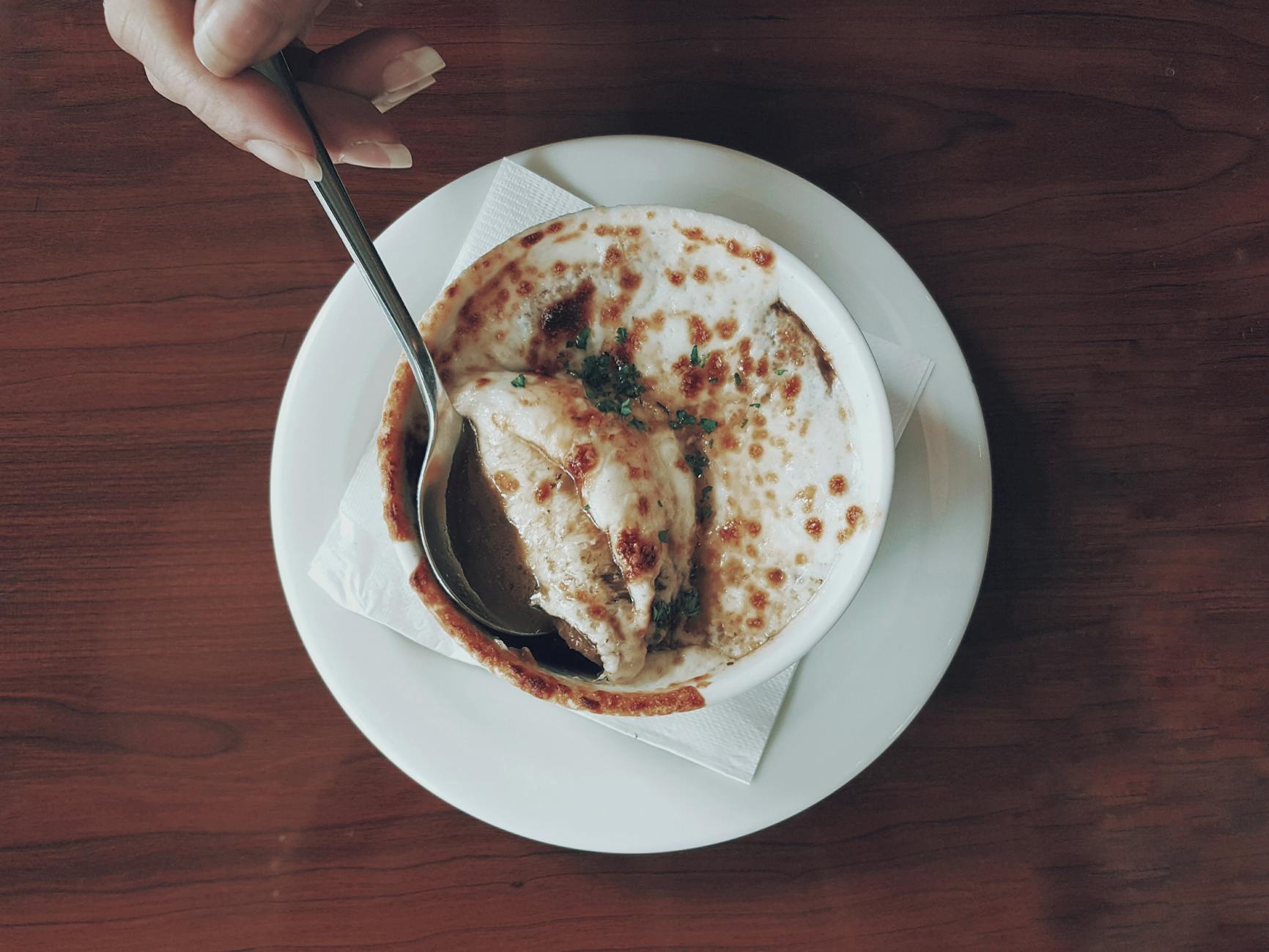
?f�? Photo by Phoenix Casino on Pexels – Free to use under the Pexels License
Why This Recipe Works: The Food Science Behind It
The secret to great French onion soup lies in two key chemical reactions: caramelization and the Maillard reaction. Caramelization occurs when the natural sugars in onions break down under heat, creating deep, sweet, and slightly nutty flavors. The Maillard reaction, on the other hand, is what gives the onions their rich, savory depth—it’s the same process that browns meat and toast. Both reactions require time and heat, but here’s the trick: you can speed them up with a few science-backed shortcuts.
According to Harvard T.H. Chan School of Public Health, evidence-based nutrition research plays an important role in understanding food preparation and nutrition.
First, slicing the onions thinly increases their surface area, allowing them to cook faster and release their sugars more efficiently. Adding a pinch of salt early in the process draws out moisture, which then evaporates and concentrates the flavors. And here’s a pro tip: a small amount of baking soda (just ¼ teaspoon) raises the pH of the onions, speeding up caramelization without altering the taste. It’s a hack I learned from a Michelin-starred chef, and it cuts the cooking time in half.
The broth is just as important. Traditional recipes call for hours of simmering beef stock, but a high-quality store-bought broth—reduced with a splash of red wine and a bay leaf—can mimic that depth in minutes. The wine’s acidity brightens the soup, while the bay leaf adds a subtle earthiness. And when it comes to the cheese topping, Gruyère is ideal because its high moisture content melts beautifully, creating that signature stretchy crust. The protein in the cheese also undergoes denaturation when broiled, forming a crispy, golden layer that locks in flavor.
Complete Ingredient Breakdown
Every ingredient in French onion soup plays a specific role, and choosing the right ones makes all the difference. Here’s what you’ll need and why:
According to World Health Organization (WHO), dietary guidelines and healthy eating plays an important role in understanding food preparation and nutrition.
For the Soup Base:
- Yellow onions (500g / 4 medium onions): Yellow onions are sweeter and more flavorful than white or red when caramelized. Their high sugar content makes them ideal for quick cooking. If you’re in a pinch, sweet onions like Vidalia work too, but they’ll caramelize even faster—keep an eye on them.
- Unsalted butter (30g / 2 tbsp) + olive oil (1 tbsp): Butter adds richness, while olive oil prevents the butter from burning at high heat. The combination gives the onions a silky texture and deep flavor. For a dairy-free version, use all olive oil or vegan butter.
- Beef broth (750ml / 3 cups): The backbone of the soup. Use low-sodium broth so you can control the seasoning. For a vegetarian version, swap in mushroom or vegetable broth—just add a splash of soy sauce for umami depth.
- Dry red wine (120ml / ½ cup): Wine deglazes the pot, lifting all the caramelized bits (fond) and adding acidity to balance the sweetness of the onions. A dry red like Cabernet Sauvignon or Pinot Noir works best. If you don’t have wine, substitute with an equal amount of beef broth plus 1 tbsp of balsamic vinegar.
- All-purpose flour (10g / 1 tbsp): A small amount of flour thickens the soup slightly, giving it a velvety texture. For gluten-free, use cornstarch or arrowroot powder (mix 1 tsp with 1 tbsp cold water before adding).
- Fresh thyme (1 sprig) or dried thyme (½ tsp): Thyme adds an earthy, slightly floral note that complements the onions. Fresh is best, but dried works in a pinch.
- Bay leaf (1 leaf): A single bay leaf infuses the broth with subtle herbal depth. Remove it before serving.
- Salt and black pepper (to taste): Salt enhances the natural sweetness of the onions, while pepper adds a hint of warmth. Season in layers—add a pinch when cooking the onions and adjust at the end.
- Baguette (4 slices, 1-inch thick): A crispy baguette slice is traditional, but any crusty bread works. For a gluten-free option, use a gluten-free baguette or toasted gluten-free bread.
- Gruyère cheese (100g / 1 cup, shredded): Gruyère melts beautifully and has a nutty, slightly sweet flavor that pairs perfectly with the onions. If you can’t find Gruyère, Swiss or Emmental are good substitutes. For a sharper taste, try Comté. For a dairy-free version, use a vegan cheese that melts well, like Miyoko’s.
- Parmesan cheese (20g / ¼ cup, grated, optional): A sprinkle of Parmesan adds a salty, umami kick. It’s not traditional, but I love the extra depth it brings.
- Step 1 – Prep the Onions:
Slice the onions thinly (about ¼-inch thick) for even cooking. The thinner they are, the faster they’ll caramelize. Heat a large pot or Dutch oven over medium-high heat and add the butter and olive oil. Once the butter foams, add the onions and a pinch of salt. Stir to coat, then spread them out in an even layer. Let them cook undisturbed for 5 minutes—this is when the Maillard reaction starts, and you’ll see the edges turn golden.
- Step 2 – Speed Up Caramelization:
After 5 minutes, stir the onions and reduce the heat to medium. Add ¼ teaspoon of baking soda (this is the secret to faster caramelization). Cook for another 10 minutes, stirring every 2-3 minutes, until the onions are deeply browned and jammy. If they start to stick, add a splash of water (1-2 tbsp) to deglaze the pot. This step should take about 15 minutes total—half the time of traditional methods.
- Step 3 – Build the Broth:
Sprinkle the flour over the onions and stir for 1 minute to cook off the raw taste. Pour in the red wine, scraping the bottom of the pot to lift any browned bits. Let it simmer for 2 minutes until the liquid reduces by half. Add the beef broth, thyme, and bay leaf. Bring to a boil, then reduce the heat to low and simmer for 10 minutes. This gives the flavors time to meld. Taste and adjust the seasoning with salt and pepper.
- Step 4 – Toast the Bread:
While the soup simmers, preheat your broiler to high. Arrange the baguette slices on a baking sheet and toast under the broiler for 1-2 minutes per side, until golden and crisp. This step ensures the bread stays sturdy when submerged in the soup.
- Step 5 – Assemble and Melt the Cheese:
Preheat your oven’s broiler to high. Ladle the soup into oven-safe bowls (or a single large baking dish if you prefer). Top each bowl with a toasted baguette slice, then pile on the shredded Gruyère and Parmesan (if using). Place the bowls on a baking sheet and broil for 2-3 minutes, until the cheese is bubbly and golden. Watch closely—cheese burns fast!
- Step 6 – Serve with Flair:
Let the soup rest for 1 minute before serving. The cheese will set slightly, making it easier to eat. Garnish with a sprinkle of fresh thyme or a grind of black pepper. Serve with extra baguette slices on the side for dipping.
- Temperature Control:
Caramelizing onions is all about patience and heat management. If your onions aren’t browning after 10 minutes, increase the heat slightly. If they’re burning, lower the heat and add a splash of water to deglaze. The goal is a deep, mahogany color—like the color of a well-worn leather jacket. And remember, the baking soda trick only works if you keep the heat at medium. Too high, and the onions will burn before they caramelize.
- Ingredient Quality:
Not all beef broths are created equal. Look for a low-sodium, high-quality broth with a rich, meaty flavor. Brands like Better Than Bouillon or homemade stock make a noticeable difference. For the wine, don’t use anything you wouldn’t drink—cooking wine is too salty and lacks depth. A dry red with good acidity, like a Côtes du Rhône, works beautifully.
- Timing and Patience:
The biggest mistake home cooks make is rushing the caramelization. If you crank the heat to high and stir constantly, the onions will steam instead of brown. Let them sit undisturbed for a few minutes at a time—this is when the magic happens. And don’t skip the simmering step for the broth. Those 10 minutes allow the flavors to meld, turning a good soup into a great one.
- Seasoning Balance:
French onion soup should taste rich and savory, with a hint of sweetness from the onions. If your soup tastes flat, it likely needs more salt or acid. A pinch of salt enhances the natural sweetness of the onions, while a splash of vinegar or lemon juice brightens the broth. Taste as you go and adjust—seasoning is a journey, not a destination.
- Vegan French Onion Soup:
Swap the beef broth for mushroom or vegetable broth, and use olive oil instead of butter. For the cheese, try a vegan Gruyère or a blend of cashew cheese and nutritional yeast. The key is to add a splash of soy sauce or miso paste to the broth for umami depth. Top with toasted baguette slices and broil until golden.
- Spicy French Onion Soup:
Add a pinch of cayenne pepper or a diced jalapeño to the onions while they caramelize. For extra heat, stir in ½ teaspoon of smoked paprika or a dash of hot sauce at the end. Top with pepper jack cheese instead of Gruyère for a spicy kick.
- French Onion Soup Grilled Cheese:
Turn this soup into a sandwich! Spread the caramelized onions on sourdough bread, top with Gruyère, and grill in a pan with butter until golden and melty. Serve with a side of the soup for dipping.
- Meal-Prep Friendly Version:
Make a big batch of the soup (without the bread and cheese) and store it in the fridge for up to 5 days or in the freezer for 3 months. When ready to eat, reheat the soup, top with toasted bread and cheese, and broil. This is a lifesaver for busy weeknights.
- French Onion Soup with a Twist:
Add a splash of apple cider or a teaspoon of honey to the onions for a touch of sweetness. For a boozy twist, deglaze the pot with a shot of brandy or cognac instead of red wine. Top with caramelized shallots or crispy fried onions for extra crunch.
For the Topping:

?f�? Photo by Elger Toss on Pexels – Free to use under the Pexels License
Step-by-Step Instructions
This recipe is designed to be quick but not rushed. The key is to caramelize the onions efficiently while building layers of flavor in the broth. Here’s how to do it in 30 minutes:

?f�? Photo by Alexey Demidov on Pexels – Free to use under the Pexels License For more delicious ideas, explore our quick and easy recipes collection.
Expert Tips from Years of Kitchen Experience
After making this soup dozens of times, I’ve learned a few tricks that take it from good to extraordinary. Here’s what separates a mediocre bowl from one that tastes like it came from a Parisian bistro:
Nutritional Benefits and Health Insights
French onion soup isn’t just delicious—it’s packed with nutritional benefits. Onions are a powerhouse of antioxidants, particularly quercetin, which has anti-inflammatory properties and may help lower blood pressure. They’re also rich in vitamin C, fiber, and prebiotics, which support gut health. A single serving of this soup (about 1.5 cups) provides roughly 20% of your daily vitamin C needs and 10% of your daily fiber.
The cheese topping adds protein and calcium, but it’s also the most calorie-dense part of the dish. One serving of this recipe contains approximately 350 calories, 18g of protein, and 20g of fat (mostly from the cheese and butter). To lighten it up, reduce the cheese by half and use a low-sodium broth. For a dairy-free version, swap the butter for olive oil and the cheese for a vegan alternative. The soup is naturally gluten-free if you omit the flour and use gluten-free bread.
One of the best things about this dish is its versatility. It’s naturally low in sugar (the sweetness comes from caramelized onions, not added sugar) and can be adapted for various dietary needs. And because it’s so flavorful, you’ll find yourself satisfied with a smaller portion—perfect for those watching their calorie intake. For more delicious ideas, explore our snacks and appetizers collection.
Creative Variations and Dietary Adaptations
While the classic version is hard to beat, there are plenty of ways to put your own spin on French onion soup. Here are a few of my favorite variations:
Frequently Asked Questions
Why did my onions burn instead of caramelizing?
Burnt onions are usually a result of heat that’s too high or not enough stirring. Caramelization requires medium heat and patience—if your onions are browning too quickly, lower the heat and stir more frequently. Adding a splash of water can also help deglaze the pot and prevent burning. And remember, the baking soda trick only works if the heat is moderate. If you’re in a hurry, it’s better to caramelize the onions slowly than to rush and end up with bitter, burnt flavors.
Can I make this soup ahead of time?
Absolutely! The soup (without the bread and cheese) can be made up to 5 days ahead and stored in the fridge. Reheat it gently on the stove, then top with toasted bread and cheese and broil just before serving. You can also freeze the soup for up to 3 months. Thaw it in the fridge overnight, then reheat and proceed with the topping. The bread and cheese should always be added fresh for the best texture.
What’s the best cheese to use if I can’t find Gruyère?
Gruyère is ideal because it melts beautifully and has a nutty, slightly sweet flavor. If you can’t find it, Swiss or Emmental are good substitutes—they melt well but lack a bit of depth. For a sharper taste, try Comté or even a mix of mozzarella and Parmesan. The key is to use a cheese that melts smoothly and has a good balance of saltiness and sweetness. Avoid pre-shredded cheese, as it often contains anti-caking agents that prevent it from melting properly.
How do I prevent the bread from getting soggy?
Soggy bread is the enemy of French onion soup! The trick is to toast the bread thoroughly before adding it to the soup. Broil it until it’s golden and crisp on both sides—this creates a barrier that prevents the broth from soaking in. Another tip is to place the toasted bread on top of the soup just before broiling, rather than letting it sit in the broth for too long. If you’re making the soup ahead, keep the bread separate and assemble just before serving.
Final Thoughts
French onion soup is one of those dishes that feels like a hug in a bowl. It’s rich, comforting, and full of depth—yet it’s surprisingly simple to make, especially with the shortcuts I’ve shared. Whether you’re whipping it up for a cozy weeknight dinner or impressing guests with a restaurant-worthy meal, this recipe delivers every time.
What I love most about this dish is how adaptable it is. You can make it vegan, spicy, or even turn it into a grilled cheese sandwich. The key is to embrace the process—caramelizing onions is meditative, and the payoff is worth every minute. And remember, cooking is about more than just following a recipe; it’s about making it your own. So experiment with the variations, adjust the seasoning to your taste, and don’t be afraid to get creative.
Now, grab your onions and get cooking. I promise, once you take that first spoonful of bubbly, cheesy goodness, you’ll understand why this dish has stood the test of time. Bon appétit!
Hungry for more recipes?
Browse our full collection of easy, delicious recipes on justcookdaily.com.