


?? In This Article
- The Rich History and Cultural Roots of This Dish
- Why This Recipe Works: The Food Science Behind It
- Complete Ingredient Breakdown
- Step-by-Step Instructions
- Expert Tips from Years of Kitchen Experience
- Nutritional Benefits and Health Insights
- Creative Variations and Dietary Adaptations
- Frequently Asked Questions
- Final Thoughts
I still remember the first time I made this dish for my family on a Tuesday night after a long day at work. The house filled with the intoxicating aroma of garlic and lemon, and my kids actually stopped arguing over homework to hover around the kitchen. What surprised me most wasn’t just how quickly it came together (28 minutes from start to finish, to be exact), but how the single sheet pan created such complex flavors. The chicken emerged with a golden, crackling skin while the potatoes soaked up all the savory juices, their edges perfectly crisped. This isn’t just another quick dinner – it’s a masterclass in how heat, fat, and acid can transform simple ingredients into something extraordinary.
The Rich History and Cultural Roots of This Dish
While this particular combination might seem like a modern weeknight invention, its components have deep roots in Mediterranean cuisine. The technique of roasting chicken with citrus and aromatics dates back to ancient Rome, where cooks would slow-roast whole birds with lemons and herbs in wood-fired ovens. The Romans were particularly fond of acidulated dishes, believing that the sourness of citrus helped tenderize meat – a culinary insight we now know has scientific merit, as the citric acid breaks down protein fibers.
The potato component tells a different story. Though potatoes originated in the Andes, they didn’t reach Europe until the 16th century. Spanish conquistadors brought them back from South America, but it took nearly two centuries for Europeans to embrace them. The French were particularly resistant, with some even believing potatoes caused leprosy. It wasn’t until Antoine-Augustin Parmentier, a pharmacist and agronomist, championed their nutritional value in the late 1700s that potatoes gained acceptance. The crispy, garlicky preparation we use here resembles the classic French pommes de terre à l’ail, a rustic dish that became popular among Parisian bistros in the 19th century.
What makes this modern version special is how it combines these historical elements into a single-pan meal perfect for contemporary life. The high-heat roasting technique we use today would have been impossible in ancient kitchens, but it’s what gives this dish its signature texture contrast – crispy outside, tender inside. The Mediterranean influence is evident in the use of olive oil, which has been a staple in that region since at least 3000 BCE, when the Minoans first began cultivating olive trees on Crete.
Interestingly, the concept of “weeknight dinners” is a relatively modern invention. Before the 20th century, most families ate their main meal at midday, with a lighter supper in the evening. The shift to evening meals coincided with industrialization and the rise of the 9-to-5 workday. This dish represents the perfect marriage of historical techniques and modern convenience – a testament to how our relationship with food continues to evolve while still honoring ancient traditions.
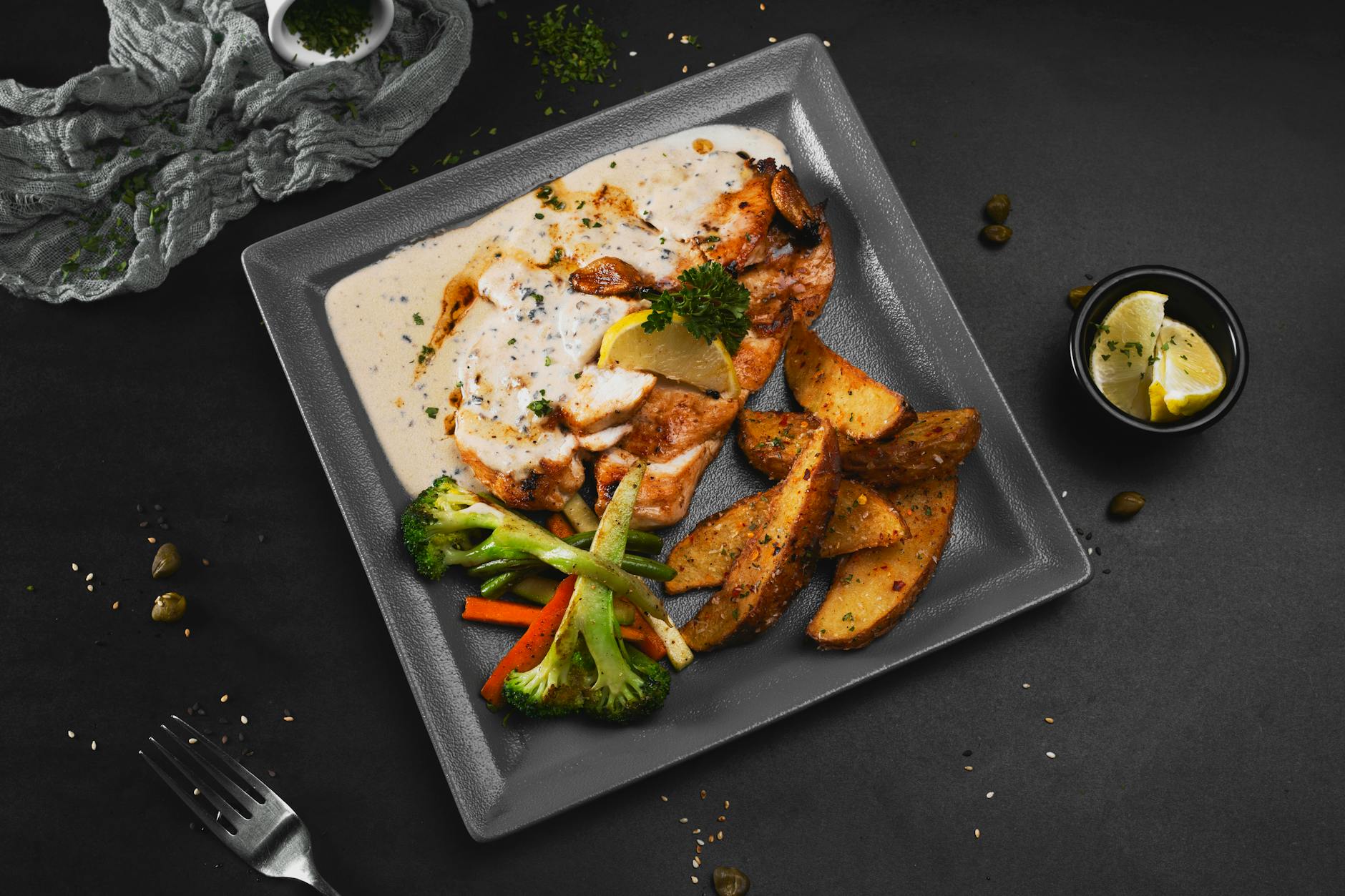
?f?? Photo by Huzaifa Bukhari on Pexels – Free to use under the Pexels License
Why This Recipe Works: The Food Science Behind It
The magic of this dish lies in three key chemical reactions that occur during cooking: the Maillard reaction, caramelization, and protein denaturation. When you sear the chicken skin at 425°F (220°C), the Maillard reaction kicks in – a complex series of chemical reactions between amino acids and reducing sugars that creates hundreds of new flavor compounds. This is what gives the chicken its golden-brown color and rich, savory taste. The high heat also renders the fat from the chicken skin, which then bastes the meat from below, keeping it moist while the exterior crisps.
According to Mayo Clinic, nutrition science and health plays an important role in understanding food preparation and nutrition.
The potatoes undergo a different transformation. As they roast, their starches break down into sugars that caramelize on the surface, creating that irresistible crispy crust. The olive oil plays a crucial role here – not just as a cooking medium, but as a heat conductor. Olive oil has a higher smoke point than many people realize (around 410°F/210°C for extra virgin), making it ideal for high-heat roasting. The fat also helps distribute heat evenly, ensuring the potatoes cook uniformly without burning.
The lemon and garlic contribute more than just flavor. The citric acid in the lemon juice helps break down the collagen in the chicken, making the meat more tender. When heated, the sulfur compounds in garlic (particularly allicin) undergo chemical changes that mellow their sharpness into sweet, nutty notes. The rosemary contains rosmarinic acid, which not only adds its distinctive piney aroma but also acts as a natural antioxidant, helping to preserve the quality of the olive oil during high-heat cooking.
Complete Ingredient Breakdown
Every ingredient in this dish serves a specific purpose, contributing to both flavor and texture. Understanding these roles will help you make informed substitutions or adjustments based on what you have available.
According to USDA FoodData Central, nutritional data and food composition plays an important role in understanding food preparation and nutrition.
For the Chicken:
- 6 bone-in, skin-on chicken thighs (about 2.5 lbs/1.1 kg): The skin is crucial for achieving that crispy texture, while the bone adds flavor and helps keep the meat juicy. Thighs are more forgiving than breasts when it comes to overcooking. If you must use breasts, choose bone-in, skin-on and reduce the cooking time by 5 minutes. Each thigh contains approximately 280 calories, 35g protein, and 15g fat.
- 1 tbsp (15ml) extra virgin olive oil: This high-quality fat has a smoke point of 410°F (210°C), perfect for our high-heat roasting. It also contains polyphenols that contribute to the dish’s depth of flavor. For a different flavor profile, you could substitute avocado oil (smoke point 520°F/270°C) or ghee (smoke point 485°F/250°C).
- 1 tsp (5g) kosher salt: Kosher salt has larger crystals than table salt, which makes it easier to control seasoning. The salt helps draw moisture out of the chicken skin, which then evaporates during cooking, contributing to crispiness. For table salt, use half the amount.
- 1/2 tsp (1g) freshly ground black pepper: Black pepper contains piperine, which enhances the absorption of other nutrients. Freshly ground pepper has more volatile oils than pre-ground, providing better flavor.
- 1.5 lbs (680g) baby Yukon Gold potatoes, halved: Yukon Golds have a medium starch content that makes them perfect for roasting – they hold their shape but develop a creamy interior. Their thin skins mean you don’t need to peel them. Each 100g serving contains 73 calories, 2g protein, and 17g carbohydrates, plus 20% of your daily vitamin C needs. For a lower-carb option, substitute with 1 lb (450g) cauliflower florets.
- 1 tbsp (15ml) extra virgin olive oil: This helps create that crispy exterior while preventing the potatoes from sticking to the pan. The oil also carries fat-soluble vitamins from the potatoes into your body.
- 1/2 tsp (2.5g) kosher salt: Salt draws moisture out of the potato cells, which then evaporates during roasting, helping to create that crispy texture.
- 1/4 tsp (0.5g) black pepper: Adds a subtle heat that complements the other flavors.
- 4 cloves garlic, thinly sliced: Slicing rather than mincing allows the garlic to cook evenly without burning. Garlic contains allicin, which has been shown to have anti-inflammatory and cardiovascular benefits. For a milder flavor, you can use whole cloves and remove them before serving.
- 1 lemon, thinly sliced (plus 1 tbsp/15ml juice): The lemon slices caramelize during roasting, developing a sweet, almost candied flavor. The juice adds brightness and helps tenderize the chicken. Meyer lemons would add a floral note, while preserved lemons would contribute a more complex, fermented flavor.
- 2 sprigs fresh rosemary (or 1 tsp/1g dried): Rosemary contains rosmarinic acid, which has antioxidant properties. Fresh rosemary has more volatile oils than dried, but dried works in a pinch. Thyme or oregano would make good substitutes.
- 1/4 cup (15g) fresh parsley, chopped: Adds a fresh, slightly peppery note that balances the richness of the chicken. Parsley is rich in vitamin K, which plays a role in bone health. Cilantro would work for a different flavor profile, or you could use basil for a sweeter note.
- 1/2 tsp (2.5g) red pepper flakes (optional): Adds a subtle heat that complements the other flavors. Capsaicin, the compound that gives chili peppers their heat, has been shown to boost metabolism and reduce inflammation.
- Prep the Chicken and Potatoes:
Pat the chicken thighs dry with paper towels – this is absolutely essential for achieving crispy skin. Any moisture on the surface will steam the skin rather than crisp it. Place the chicken in a large bowl and toss with 1 tbsp olive oil, 1 tsp salt, and 1/2 tsp black pepper. In a separate bowl, toss the halved potatoes with 1 tbsp olive oil, 1/2 tsp salt, and 1/4 tsp black pepper.
One trick I discovered after years of cooking: let the chicken sit at room temperature for 10-15 minutes after seasoning. This allows the salt to penetrate the meat more deeply, resulting in better seasoning throughout rather than just on the surface.
- Arrange on the Baking Sheet:
Line your baking sheet with parchment paper for easy cleanup. Arrange the potatoes cut-side down in a single layer, leaving space between each piece. Place the chicken thighs skin-side up between the potatoes, ensuring they’re not touching each other. This spacing is crucial – crowding the pan will cause the chicken to steam rather than roast, resulting in soggy skin.
Scatter the sliced garlic and lemon slices over the chicken and potatoes. Tuck the rosemary sprigs between the chicken pieces. The lemon slices should be placed directly on the chicken skin – as they roast, they’ll caramelize and infuse the meat with their bright, citrusy flavor.
- Initial High-Heat Roast:
Place the baking sheet on the middle rack of your preheated 425°F (220°C) oven. Roast for 20 minutes. This initial high heat is what creates that crispy skin and caramelized potato edges. The chicken fat will render out, basting the potatoes from below.
Here’s the food science at work: at this temperature, the water in the chicken skin evaporates quickly, allowing the Maillard reaction to occur. The potatoes undergo both caramelization (the browning of their natural sugars) and the Maillard reaction (the reaction between their amino acids and sugars).
- Baste and Rotate:
After 20 minutes, remove the pan from the oven. Using tongs, flip the potatoes so the cut sides are now up. Baste the chicken with the pan juices – this helps keep the meat moist and adds another layer of flavor to the skin. Rotate the pan 180 degrees to ensure even cooking.
The basting step is crucial for two reasons: first, it redistributes the rendered chicken fat, which helps crisp the potatoes further. Second, it ensures the chicken cooks evenly, as most home ovens have hot spots. If your oven has a convection setting, you can use it for this second half of cooking to promote even browning.
- Finish Roasting:
Return the pan to the oven and roast for another 8-10 minutes, or until the chicken reaches an internal temperature of 175°F (79°C) and the potatoes are golden brown and crispy. The chicken skin should be deeply golden and crisp to the touch.
Use an instant-read thermometer to check the chicken temperature – insert it into the thickest part of the thigh, avoiding the bone. The temperature will continue to rise about 5 degrees as the chicken rests, so removing it at 175°F (79°C) ensures it reaches the safe 180°F (82°C) without overcooking.
- Rest and Garnish:
Remove the pan from the oven and let the chicken rest for 5 minutes. This allows the juices to redistribute throughout the meat, ensuring every bite is juicy. Sprinkle with the chopped parsley and red pepper flakes (if using). Squeeze an additional 1 tbsp of lemon juice over everything for a final burst of brightness.
The resting period is when the magic happens: the muscle fibers, which have contracted during cooking, begin to relax and reabsorb the juices that were forced toward the center. Cutting into the chicken too soon would cause all those precious juices to run out onto the plate rather than staying in the meat. For more delicious ideas, explore our healthy dinner recipes collection.
- Temperature Control:
The most common mistake I see is not preheating the oven properly. A truly hot oven is essential for achieving that crispy skin. I recommend investing in an oven thermometer – many home ovens are off by 25-50 degrees. For this recipe, you want that initial blast of 425°F (220°C) heat to jumpstart the Maillard reaction.
Another temperature tip: if your chicken skin isn’t browning enough after 20 minutes, increase the oven temperature to 450°F (230°C) for the final 5-8 minutes. Just keep an eye on it to prevent burning. The potatoes can handle the higher heat, but the garlic and lemon slices might need to be removed if they’re browning too quickly.
- Ingredient Quality:
Not all chicken thighs are created equal. For the best results, choose thighs with the skin intact and a good layer of fat underneath. Organic or pasture-raised chicken will have more flavor and a better texture. The fat from these chickens is also healthier, containing more omega-3 fatty acids.
When it comes to potatoes, size matters. Baby Yukon Golds (about 1.5 inches/4 cm in diameter) are ideal because they cook through at the same rate as the chicken. If you can only find larger potatoes, cut them into 1-inch (2.5 cm) chunks to ensure even cooking. And always choose potatoes that feel firm with no soft spots or sprouts.
- Timing and Patience:
Rushing is the enemy of crispy chicken. Resist the urge to flip the chicken or stir the potatoes too often. Each time you open the oven door, you lose heat and disrupt the cooking process. The initial 20-minute roast should be hands-off – this is when the magic happens.
If you’re really pressed for time, you can parboil the potatoes for 5 minutes before roasting. This jumpstarts their cooking process, allowing them to crisp up faster in the oven. Just be sure to drain them well and pat them dry before tossing with oil – any excess moisture will prevent crisping.
- Seasoning Balance:
The key to great flavor is layering your seasoning. We start by seasoning the chicken and potatoes separately, then add aromatics during cooking, and finish with fresh herbs and lemon juice. This creates depth of flavor rather than just surface-level seasoning.
One of my favorite tricks is to add a pinch of sugar (about 1/4 tsp) to the potatoes when tossing them with oil. This helps promote caramelization, giving you even crispier edges. Just be careful not to overdo it – too much sugar can cause burning.
For the Potatoes:
For the Aromatics:
For Finishing:
Step-by-Step Instructions
Before you begin, take a moment to practice mise en place – the French culinary term for “everything in its place.” This means measuring all your ingredients, prepping your aromatics, and having your tools ready. For this recipe, you’ll need a large rimmed baking sheet (half-sheet pan size, 18×13 inches/46×33 cm), parchment paper, and a sharp knife. Preheating your oven is crucial – we want that initial blast of heat to start the Maillard reaction immediately.
Expert Tips from Years of Kitchen Experience
After making this dish hundreds of times – for weeknight dinners, dinner parties, and even once for a last-minute potluck – I’ve learned what separates a good version from an outstanding one. These tips come from both my successes and my failures, and they’ll help you achieve restaurant-quality results every time.
Nutritional Benefits and Health Insights
This dish isn’t just delicious – it’s also packed with nutritional benefits. A single serving (one chicken thigh plus about 1/2 cup of potatoes) provides approximately 520 calories, with a balanced macronutrient profile: 38g protein, 28g fat (mostly heart-healthy monounsaturated fats from the olive oil), and 25g carbohydrates. The dish is also rich in several essential vitamins and minerals.
The chicken thighs are an excellent source of complete protein, providing all nine essential amino acids your body needs. They’re particularly rich in B vitamins, especially niacin (B3) and vitamin B6, which play crucial roles in energy metabolism and brain function. A single thigh provides about 40% of your daily niacin needs. The dark meat also contains more iron and zinc than chicken breast – important minerals for immune function and oxygen transport.
The potatoes contribute more than just carbohydrates. A medium Yukon Gold potato provides 20% of your daily vitamin C needs, 12% of potassium (more than a banana), and 10% of vitamin B6. The skin contains most of the fiber – about 2g per potato – which aids in digestion and helps maintain stable blood sugar levels. The olive oil used in cooking adds vitamin E and polyphenols, which have antioxidant and anti-inflammatory properties.
For those with dietary restrictions, this dish can be easily adapted. To make it gluten-free, simply ensure your spices are certified gluten-free (some blends contain wheat as a filler). For a dairy-free version, the recipe is naturally dairy-free as written. To reduce sodium, use half the amount of salt and increase the lemon juice and herbs for flavor. For a lower-carb option, substitute the potatoes with cauliflower florets or Brussels sprouts – both will crisp up beautifully in the chicken fat. For more delicious ideas, explore our vegetarian meal ideas collection.
Creative Variations and Dietary Adaptations
While this lemon garlic chicken with crispy potatoes is delicious as written, don’t be afraid to make it your own. Here are several variations that keep the spirit of the dish while offering different flavor profiles and dietary adaptations.
Mediterranean Twist:
Add 1/2 cup (75g) pitted Kalamata olives and 1/4 cup (40g) crumbled feta cheese during the last 5 minutes of cooking. Replace the rosemary with 1 tsp (1g) dried oregano. The salty olives and tangy feta complement the lemon and garlic beautifully, while the oregano adds an earthy note. This version increases the healthy fats and adds more antioxidants from the olives.
Spicy Harissa Version:
Mix 1 tbsp (15g) harissa paste with the olive oil before tossing with the chicken. Add 1/2 tsp (1g) ground cumin and 1/2 tsp (1g) smoked paprika to the potatoes. Garnish with fresh cilantro instead of parsley. Harissa, a North African chili paste, adds heat and depth of flavor. The cumin and smoked paprika enhance the smoky notes, creating a more complex flavor profile.
Vegan Adaptation:
Replace the chicken with 1.5 lbs (680g) cauliflower steaks (cut from the center of the head) and 1 can (15 oz/425g) chickpeas, drained and patted dry. Toss the cauliflower and chickpeas with 2 tbsp (30ml) olive oil, 1 tsp (5g) salt, and 1/2 tsp (1g) black pepper. Roast at 425°F (220°C) for 25 minutes, then add the potatoes and continue roasting for another 15-20 minutes. The cauliflower develops a meaty texture when roasted, while the chickpeas become crispy and nutty.
Asian-Inspired Version:
Replace the lemon with 2 tbsp (30ml) soy sauce and 1 tbsp (15ml) rice vinegar. Add 1 tbsp (15g) grated ginger and 1 tbsp (15ml) honey to the marinade. Garnish with sliced scallions and sesame seeds instead of parsley. The soy sauce adds umami depth, while the ginger and rice vinegar provide a bright, tangy contrast. This version works particularly well with sweet potatoes instead of Yukon Golds.
Meal-Prep Friendly:
To make this dish meal-prep friendly, roast the chicken and potatoes separately. Store them in airtight containers in the refrigerator for up to 4 days. When ready to eat, reheat the chicken in a 375°F (190°C) oven for 10-15 minutes until crispy, and the potatoes in a skillet over medium heat with a little oil until heated through. This prevents the chicken skin from becoming soggy during storage.
Frequently Asked Questions
Why is my chicken skin not crispy?
The most common reason for soggy chicken skin is excess moisture. Make sure to pat the chicken dry thoroughly before seasoning – any surface moisture will steam the skin rather than crisp it. Another factor could be overcrowding the pan – if the chicken pieces are touching, they’ll steam each other. Finally, resist the urge to flip the chicken too often – let it cook undisturbed for at least 20 minutes to allow the Maillard reaction to occur.
If you’re still having trouble, try this trick: after the initial 20-minute roast, remove the chicken from the pan and place it on a wire rack set over a baking sheet. Increase the oven temperature to 450°F (230°C) and roast for another 5-8 minutes. The wire rack allows air to circulate all around the chicken, ensuring even crisping.
Can I make this ahead of time?
While this dish is best served fresh, you can prep some components ahead of time. The potatoes can be washed, cut, and stored in cold water in the refrigerator for up to 24 hours – just be sure to drain and pat them very dry before roasting. The chicken can be seasoned and refrigerated uncovered for up to 12 hours – this actually helps dry out the skin for better crisping.
If you need to make the entire dish ahead, roast the chicken and potatoes separately. Store them in airtight containers in the refrigerator for up to 3 days. To reheat, place the chicken on a wire rack set over a baking sheet and reheat at 375°F (190°C) for 10-15 minutes until crispy. Reheat the potatoes in a skillet over medium heat with a little oil until heated through and crispy again.
What can I substitute for chicken thighs?
While chicken thighs are ideal for this recipe because of their flavor and forgiving nature, you can substitute with other proteins. For a quicker cooking time, use boneless, skinless chicken breasts – reduce the initial roasting time to 15 minutes, then flip and roast for another 5-8 minutes. For a vegetarian option, try portobello mushrooms – their meaty texture holds up well to roasting. Tofu would also work, but press it well and toss with cornstarch before roasting to achieve a crispy exterior.
If you’re using a different protein, adjust the cooking time based on the size and type of meat. Fish fillets, for example, would only need 10-12 minutes total, while bone-in chicken legs might need 35-40 minutes. Always use an instant-read thermometer to check for doneness – chicken should reach 175°F (79°C), pork 145°F (63°C), and fish 145°F (63°C).
How can I make this dish lower in fat?
To reduce the fat content, you can use skinless chicken thighs – though you’ll sacrifice some crispiness. Another option is to remove the skin after cooking, though this is a bit like taking the cheese off a pizza. For the potatoes, reduce the olive oil to 1 tsp (5ml) and use a non-stick baking sheet or parchment paper to prevent sticking.
A better approach might be to focus on the quality of the fat rather than the quantity. The olive oil in this recipe provides heart-healthy monounsaturated fats and antioxidants. If you’re concerned about fat intake, consider that the fat helps your body absorb fat-soluble vitamins (A, D, E, and K) from the vegetables. You could also serve smaller portions with a larger side salad to balance the meal.
Final Thoughts
There’s something almost magical about this dish – how simple ingredients can transform into something so flavorful with just a little heat and time. I love how the lemon slices caramelize into sweet, tangy bursts of flavor, and how the garlic becomes mellow and nutty after roasting. The crispy potatoes, infused with chicken fat and herbs, are always the first thing to disappear from the plate.
What I appreciate most about this recipe is its versatility. It’s become my go-to when I need to impress guests but don’t have hours to spend in the kitchen. It’s equally at home on a Tuesday night with the family as it is at a weekend dinner party. And the best part? The single pan means minimal cleanup – something we can all appreciate after a long day.
I encourage you to make this recipe your own. Swap the herbs, adjust the spices, or try one of the variations I’ve suggested. Cooking should be an adventure, not a chore. The next time you’re staring into the refrigerator at 6pm wondering what to make for dinner, remember this: with just a few simple ingredients and 30 minutes, you can create a meal that’s nourishing, delicious, and sure to bring smiles to the table.
Now, if you’ll excuse me, I need to go make this again – just writing about it has made me hungry!