


🍳 In This Article
There are few culinary moments as satisfying as pulling a perfectly cooked piece of salmon off the grill. For years, I struggled with grilling fish – it would stick, overcook, or just lack that vibrant flavor I craved. Then, one sunny afternoon, while experimenting with a handful of fresh dill and a bright lemon, I had an epiphany. The simple combination, paired with the right grilling technique, transformed my salmon from “just okay” to “absolutely divine.” It was the kind of meal that makes you close your eyes and savor every flaky bite, and it quickly became a staple in my kitchen. This recipe is the culmination of those trials and triumphs, designed to ensure you achieve that same blissful perfection every single time.
What Makes This Dish So Special
Grilled salmon with lemon and dill is a culinary classic for a reason. Its inherent elegance belies its incredible simplicity, making it a go-to for both seasoned chefs and novice cooks alike. The magic truly lies in the harmonious interplay of its core components: the rich, buttery texture of the salmon, the sharp, refreshing zest and juice of the lemon, and the delicate, slightly anisy perfume of fresh dill. Each ingredient plays a crucial role, elevating the others without overwhelming the natural beauty of the fish. It’s a flavor profile that evokes images of sun-drenched coastal kitchens and fresh sea breezes, a true taste of summer any time of year.
Beyond its delectable taste, this dish stands out for its impressive nutritional benefits. Salmon is a powerhouse of essential nutrients, most notably its high concentration of Omega-3 fatty acids. These healthy fats are vital for heart health, brain function, and reducing inflammation, making grilled salmon a delicious way to support your overall well-being. Coupled with the vitamin C from lemons and the various antioxidants found in dill, this meal isn’t just satisfying for your palate; it’s a genuine boost for your body. It’s the kind of wholesome food that nourishes you from the inside out, aligning perfectly with a healthy and balanced lifestyle.
What I personally adore about this recipe is its incredible versatility and ease. Despite its sophisticated flavor, it comes together remarkably quickly, making it an ideal choice for a busy weeknight. Yet, it’s elegant enough to impress guests at a dinner party. The grilling process itself adds a subtle smokiness and a beautiful char that elevates the entire experience, creating a flaky, moist interior with a tantalizingly crisp exterior. One trick I have discovered is that the simplicity of the marinade allows the quality of your ingredients to shine through, so choosing fresh, vibrant salmon and herbs makes all the difference. This dish truly embodies the justcookdaily.com philosophy: delicious, healthy, and achievable meals for everyone.
According to BBC Good Food, mastering fundamental cooking techniques makes every recipe easier and more delicious.
Ingredients You Will Need
The beauty of this recipe lies in its reliance on a few high-quality, fresh ingredients. While the list is short, each component plays a vital role in building the dish’s incredible flavor and texture. Don’t skimp on freshness here – it truly makes a world of difference.
• Four (4) 6-ounce Salmon Fillets, skin-on preferred: When selecting salmon, look for vibrant color, a firm texture that springs back when gently pressed, and a fresh, mild “ocean” smell – never fishy. Skin-on fillets are my personal preference for grilling as the skin acts as a protective layer, helping the fish retain moisture and preventing it from sticking to the grates. It also crisps up beautifully, offering a textural contrast. Salmon is rich in healthy fats, particularly Omega-3s, which are polyunsaturated fatty acids. These fats contribute to the fish’s tender texture and delicious flavor, and they also mean salmon cooks quickly because fat conducts heat efficiently.
According to Bon Appétit, mastering fundamental cooking techniques makes every recipe easier and more delicious.
• 2 tablespoons Extra Virgin Olive Oil: A good quality olive oil provides a fruity base for our marinade and helps prevent the salmon from sticking to the grill grates. Its relatively high smoke point makes it suitable for grilling, and it imparts a subtle richness to the fish.
• 2 large Lemons: You’ll need both the zest and the juice. Choose firm, heavy lemons with smooth, unblemished skin. The acidity of lemon juice brightens the flavor of the salmon, cutting through its richness, while the zest contains aromatic oils that deliver an intense burst of citrus.
• 3 tablespoons Fresh Dill, finely chopped: Fresh dill is non-negotiable for this recipe. Its unique herbaceous, slightly anisy flavor pairs exquisitely with salmon. Dried dill simply doesn’t offer the same vibrant aroma or delicate taste. Dill contains volatile oils like carvone and limonene, which give it its distinctive fragrance and flavor, complementing the fish without overpowering it.
• 2 cloves Garlic, minced: Garlic adds a foundational layer of aromatic flavor that enhances the overall depth of the dish. Mincing it finely ensures even distribution of its pungent notes.
• 1 teaspoon Kosher Salt: Salt is crucial for seasoning and enhancing the natural flavors of the salmon. Kosher salt has larger crystals, which are easier to control and distribute evenly. It also helps to draw out a tiny bit of moisture, firming up the fish slightly.
• ½ teaspoon Freshly Ground Black Pepper: Freshly ground pepper offers a more potent aroma and sharper taste than pre-ground pepper, adding a gentle heat and complexity.
• Optional for garnish: Extra fresh dill sprigs, lemon wedges.

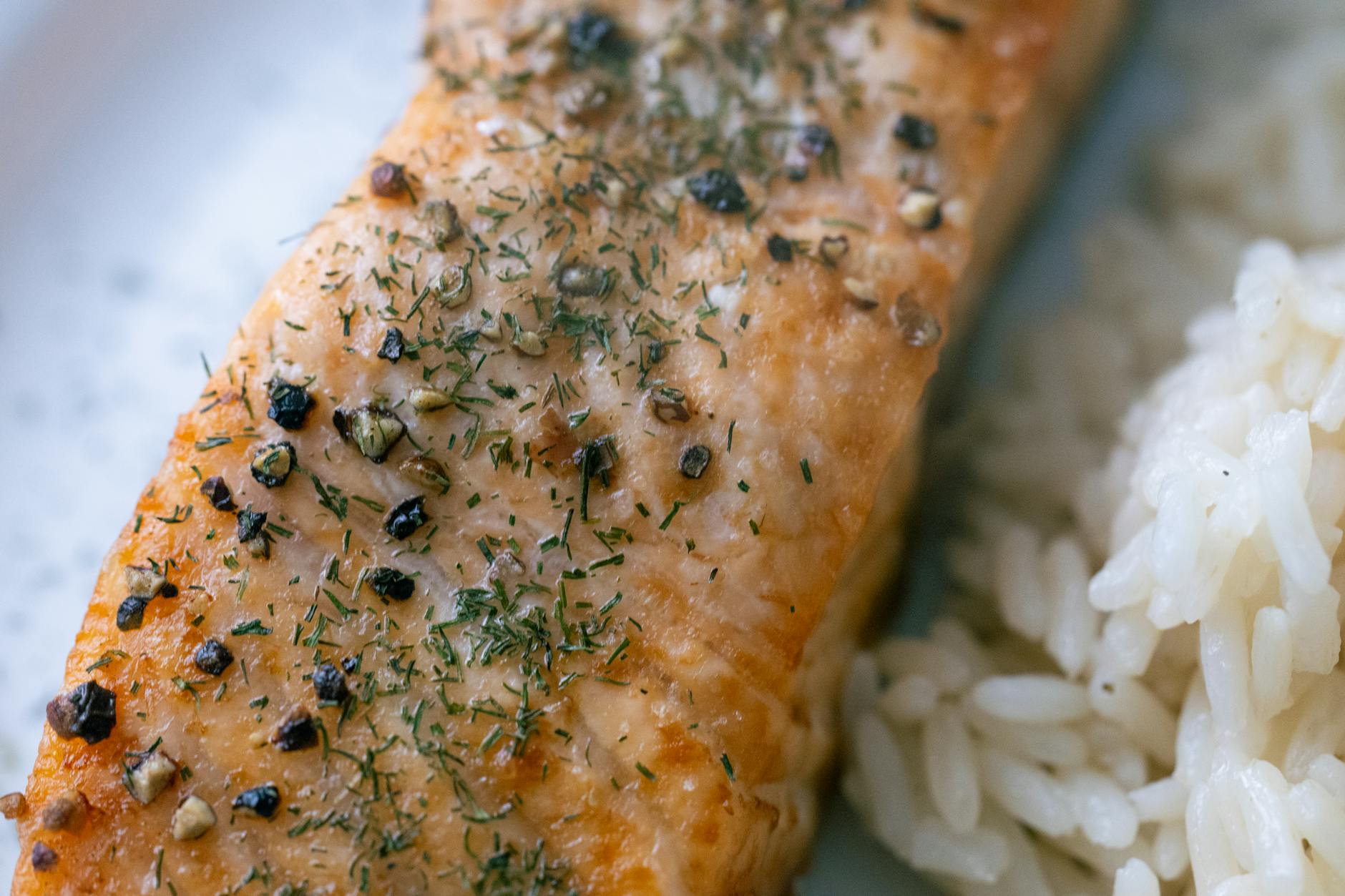
📷 Photo by Summer Stock on Pexels For more delicious ideas, check out our delicious dessert recipes section.
Step-by-Step Instructions
Grilling salmon to perfection might seem daunting, but with these clear, concise steps, you’ll achieve a beautifully flaky, moist fillet every time. The key is preparation and understanding the heat. Trust the process, and get ready for a truly delicious meal!
- Step 1: Prepare the Salmon Fillets
Begin by gently rinsing your salmon fillets under cold water and then, crucially, pat them thoroughly dry with paper towels. This step is vital because excess moisture on the surface of the fish will steam rather than sear, preventing you from getting those beautiful, crispy grill marks and that desirable caramelized crust. Place the dried fillets on a plate or baking sheet. - Step 2: Whisk Together the Lemon Dill Marinade
In a small bowl, combine the extra virgin olive oil, the juice from one large lemon (about 2-3 tablespoons), the zest from both large lemons, the finely chopped fresh dill, the minced garlic, kosher salt, and freshly ground black pepper. Whisk everything together until well combined. The zest contains concentrated essential oils, giving a much more intense lemon flavor than juice alone, while the dill infuses the oil with its signature herbaceous notes. - Step 3: Marinate the Salmon
Generously brush the lemon dill marinade over all sides of each salmon fillet. If you’re using skin-on salmon, ensure you coat the flesh side thoroughly. For optimal flavor infusion, cover the plate or baking sheet and let the salmon marinate at room temperature for 15-20 minutes. If you have more time, you can refrigerate it for up to 30 minutes, but no longer, as the lemon juice can start to “cook” the fish (similar to ceviche). While the salmon marinates, you can preheat your grill. - Step 4: Preheat and Prepare Your Grill
Preheat your grill to medium-high heat, aiming for a temperature between 400-450°F (200-230°C). Allow the grill to heat up for at least 10-15 minutes to ensure it reaches a consistent temperature. Once hot, clean the grill grates thoroughly with a wire brush. Then, lightly oil the grates by dipping a wadded paper towel in a little olive oil and carefully wiping it over the hot grates using long-handled tongs. A clean, well-oiled grate is your best defense against sticking. - Step 5: Grill the Salmon to Perfection
Carefully place the salmon fillets, skin-side down (if applicable), onto the hot, oiled grill grates. Close the lid and cook for 4-6 minutes without moving them. This allows the skin to crisp up and release naturally from the grates. After 4-6 minutes, gently lift a corner of the fillet with a spatula; if it releases easily, it’s ready to flip. Flip the salmon and cook on the second side for another 3-5 minutes, or until the internal temperature reaches 145°F (63°C) at its thickest part, measured with an instant-read thermometer. The fish should flake easily with a fork and be opaque throughout. - Step 6: Rest and Serve
Once cooked, carefully transfer the grilled salmon fillets to a clean plate or cutting board. Tent them loosely with aluminum foil and let them rest for 5 minutes. Resting allows the juices to redistribute throughout the fish, resulting in a more moist and tender fillet. Garnish with additional fresh dill sprigs and lemon wedges, if desired. Serve immediately with your favorite side dishes.
Pro Tips for Perfect Results
Achieving that restaurant-quality grilled salmon is simpler than you might think, especially when you understand a few key principles. These tips are born from years of kitchen experiments and they will elevate your salmon from good to truly unforgettable.
• Tip 1: The Critical Role of Patting Dry: This cannot be stressed enough. When you pat the salmon fillets thoroughly dry with paper towels before applying the marinade, you remove surface moisture. Why is this so important? Moisture creates steam when it hits a hot surface, which prevents the Maillard reaction – the complex chemical process responsible for the delicious browning and development of savory flavors on the surface of the fish. A dry surface allows for direct contact with the hot grill, leading to a beautiful, crispy crust and those coveted grill marks, while locking in the natural juices.
According to Taste of Home, mastering fundamental cooking techniques makes every recipe easier and more delicious.
• Tip 2: Skin-On is Your Grilling Ally: If possible, always opt for skin-on salmon fillets when grilling. The skin acts as a natural protective barrier between the delicate flesh of the fish and the intense heat of the grill. This helps prevent the salmon from drying out and sticking to the grates. It also allows the skin to crisp up beautifully, transforming into a delicious, edible cracker-like layer that adds incredible texture. If you don’t enjoy eating the skin, it’s incredibly easy to slide it off after the salmon is cooked and rested, leaving you with perfectly moist, skinless fish.
• Tip 3: Master the Art of “Don’t Overcook”: Salmon, like most fish, cooks very quickly, and overcooking is the most common mistake people make. When fish proteins are exposed to excessive heat for too long, they denature excessively, causing them to squeeze out moisture and become dry, tough, and chalky. Aim for an internal temperature of 145°F (63°C) at the thickest part of the fillet for a perfectly flaky, moist result. Remember that fish continues to cook for a few minutes after it’s removed from the heat (carryover cooking), so pulling it off just slightly under this temperature can also work. Look for visual cues: the flesh should turn opaque throughout and flake easily with a fork, but still have a hint of translucent pink in the very center if you prefer it slightly less done.
• Tip 4: Clean and Oil Your Grates Diligently: A clean, well-oiled grill grate is your secret weapon against sticking. Food, especially delicate fish, is prone to sticking to dirty or dry grates. Before you even think about placing your salmon on the grill, ensure your grates are sparkling clean using a wire brush. Then, once the grill is hot, lightly oil the grates with a high-smoke-point oil (like canola, vegetable, or a little olive oil on a paper towel held with tongs). This creates a non-stick surface and helps in achieving those beautiful, distinct grill marks without tearing the fish. For more delicious ideas, check out our easy lunch ideas section.
Variations and Substitutions
While the classic lemon dill combination is hard to beat, this grilled salmon recipe is incredibly adaptable. Don’t be afraid to experiment with different flavors and techniques to suit your mood or what you have on hand.
• Spicy Salmon with Smoked Paprika: For those who love a little kick, swap out some of the dill for a teaspoon of smoked paprika and a pinch of cayenne pepper. The smoky notes of the paprika pair beautifully with the richness of the salmon, while the cayenne adds a gentle warmth. A squeeze of lime juice instead of lemon can also enhance this spicier profile.
According to AllRecipes, mastering fundamental cooking techniques makes every recipe easier and more delicious.
• Mediterranean Herb Medley: Instead of just dill, create an herb blend using finely chopped fresh parsley, oregano, and a touch of fresh mint. Add a tablespoon of capers to the marinade for a briny, tangy punch, and perhaps some finely diced sun-dried tomatoes. This variation transports your taste buds straight to the Greek Isles.
• Asian-Inspired Glaze: For a completely different flavor profile, skip the lemon and dill entirely. Instead, whisk together 2 tablespoons of soy sauce (or tamari for gluten-free), 1 tablespoon of honey or maple syrup, 1 teaspoon of grated fresh ginger, 1 minced garlic clove, and a splash of sesame oil. Brush this glaze onto the salmon during the last few minutes of grilling, allowing it to caramelize. Garnish with toasted sesame seeds and sliced green onions.
• Sheet Pan Salmon (Oven Method): No grill? No problem! This recipe adapts beautifully to the oven. Preheat your oven to 400°F (200°C). Arrange the marinated salmon fillets on a parchment-lined baking sheet. You can even add some quick-cooking vegetables like asparagus spears or cherry tomatoes tossed with a little olive oil, salt, and pepper around the salmon. Bake for 12-18 minutes, depending on the thickness of the fillets, or until the internal temperature reaches 145°F (63°C).
• Alternative Fish Choices: If salmon isn’t available or you’re looking for a change, this marinade works wonderfully with other firm, flaky fish. Consider trout, halibut, or cod. Just be mindful of cooking times, as thinner fillets will cook faster. For a vegetarian option, large portobello mushroom caps can be marinated and grilled for a delicious plant-based alternative.
Frequently Asked Questions
How do I know when my grilled salmon is perfectly cooked?
The best way to tell if your grilled salmon is perfectly cooked is by using an instant-read meat thermometer. Insert it into the thickest part of the fillet; it should register 145°F (63°C). Visually, the flesh should appear opaque throughout, and it should flake easily with a fork. If you prefer your salmon slightly less done, with a tiny bit of translucence in the very center, you can pull it off the grill at around 135-140°F (57-60°C), remembering that it will continue to cook slightly as it rests. Avoid overcooking, as this is the primary reason for dry, tough fish.
Can I meal prep grilled salmon and how long does it last?
Absolutely! Grilled salmon is an excellent component for meal prepping. Once cooked, allow the salmon to cool completely before transferring it to an airtight container. It will last safely in the refrigerator for up to 3-4 days. For reheating, gently warm it in a microwave on a low setting, or in a preheated oven at 275°F (135°C) for about 10-15 minutes, covering it loosely with foil to prevent it from drying out. Cold grilled salmon is also fantastic flaked over salads or in wraps, offering a convenient and healthy protein boost throughout the week.
What are some good side dishes to serve with lemon dill grilled salmon?
The bright, fresh flavors of lemon dill grilled salmon pair beautifully with a variety of side dishes. For a light and healthy meal, consider roasted asparagus, steamed green beans, or a simple mixed green salad with a vinaigrette dressing. If you’re looking for something more substantial, quinoa salad with cucumber and cherry tomatoes, wild rice pilaf, or even a light couscous salad would be excellent choices. Roasted potatoes or sweet potato wedges also make a comforting and satisfying accompaniment, soaking up any delicious juices from the fish.
What’s the best way to prevent salmon from sticking to the grill?
Preventing salmon from sticking to the grill comes down to a few critical steps. First, ensure your grill grates are impeccably clean. Any residual food or char will act as an adhesive. Second, preheat your grill to a medium-high temperature (400-450°F / 200-230°C) and allow it to get truly hot; cold grates are more prone to sticking. Third, once hot, thoroughly oil the grates with a high-smoke-point oil (like canola or vegetable oil) using a paper towel held by tongs. Finally, and perhaps most importantly, make sure your salmon fillets are patted completely dry before applying the marinade, and resist the urge to move them too soon. Allow the fish to cook undisturbed for at least 4-6 minutes on the first side; it will naturally release from the grates when a crust has formed.
Final Thoughts
And there you have it – the blueprint for grilled salmon perfection! This recipe isn’t just about cooking a meal; it’s about creating an experience that’s both deeply satisfying and wonderfully nourishing. The vibrant flavors of lemon and dill, combined with the flaky richness of perfectly grilled salmon, truly elevate a simple weeknight dinner into something special. I encourage you to embrace the process, trust these tips, and make this dish your own. It’s a fantastic way to enjoy healthy, delicious food that comes together effortlessly. I’d love to hear how it turns out for you – share your creations and thoughts in the comments below! Happy grilling!